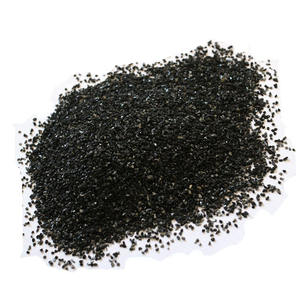
Professional qrafit material tədarükçüsü, EV üçün qrafit, yağ, soba və hər hansı digər sənayelər.

(Qrafit anod və ya katod?)
oldu 2007; Stiv Cobs iPhone-u təqdim etdi, J. K. Roulinq Harri Potter haqqında son kitabını yekunlaşdırırdı, and the worst financial crisis since the 1930s began to wreak havoc on global economies. It was also the year that Gene Berdichevsky, engineer number 7 at electric car pioneer Tesla, started to wonder why gains in battery cathode capacity that had been made over the past few years were tapering off.
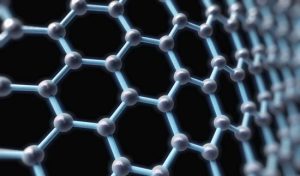
Qrafit, a metastable allotrope of carbon that is soft and malleable, is the ideal host structure for the reversible intercalation of lithium cations in lithium-ion batteries (LIB). In the LIB’s anode, lithium ions are inserted into vacant sites within a graphite crystal lattice/frame during charging and extraction processes. This allows a high-rate operation with minimum volume change and mechanical strain, as well as minimal loss of active material (qrafit) during repeated insertion/extraction cycles.
The key to the graphite anode’s performance lies in its complex periodic architecture. The van der Waals forces between graphene layers and the ionic repulsion between them enable the intercalant anions to occupy space in graphite’s carbon layer structures in a stage-independent fashion. The varying repeat distance and intercalant gallery height (di) of each stage are the fundamental factors that determine its charge storage capacity (CSC).
Lakin, the current commercial graphite anode can’t meet the demands for higher energy density, operation reliability, and system integration in longer-range portable electronic devices, larger-capacity electric vehicles, and grid scale energy storage applications. That’s why silicon—which has long been under study as a high-performance alternative—has come into focus as the new benchmark for LIB anode materials.

(Qrafit anod və ya katod?)