


Ọjọgbọn lẹẹdi ohun elo olupese, lẹẹdi fun EV, girisi, ileru ati awọn eyikeyi miiran ise.

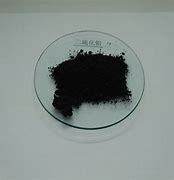
(Kini ipilẹ ipilẹ ati awọn ohun-ini ti graphite?)
The crystal structure of graphite
Graphite is a substance composed of a single carbon element, and its crystal structure belongs to the hexagonal crystal system, showing a hexagonal layered structure. The carbon atoms on the plane combine with σ bonds formed by sp2 hybrid orbitals and delocalized π bonds formed by Pz orbitals to form a firm hexagonal grid-like plane, the carbon-carbon atomic spacing is 1.42 Å, and there is very strong bond energy between carbon atoms (345KJ/mol), the carbon atom planes are bound by weak van der Waals forces (bond energy is 16.7KJ/mol), and the interlayer spacing is 3.354Å.
Graphite is soft and dark gray; it has a greasy feel and can contaminate paper. Lile jẹ 1 ~ 2, and the theoretical density is 2.26g/cm3.
There is no pure graphite in nature, and natural graphite minerals often contain impurities such as SiO2, A12O3, FeO, CaO, P2O5, CuO, ati be be lo.
These impurities often appear in the form of minerals such as quartz, pyrite, and carbonate. Ni afikun, it also contains water, hydrocarbons, CO2, H2, N2, ati awọn gaasi miiran.
Nitorina, in the analysis of graphite, in addition to the determination of the fixed carbon content, the content of volatile matter and ash must also be determined at the same time.
Basic properties of graphite
Nitori eto pataki rẹ, graphite has the following excellent properties:
(1) High-temperature resistance: Graphite is one of the most temperature-resistant substances. It has no melting point under normal pressure. Even if it is burned by an ultra-high temperature arc, the weight loss is very small.
(2) Electrical and thermal conductivity. Graphite has very high electrical and thermal conductivity. The thermal conductivity decreases with increasing temperature and at very high temperatures graphite even becomes adiabatic.
(3) Lubricity: The lubricity of graphite depends on the size of the graphite grains and the degree of development of the crystals. The larger the graphite grain, the more perfect the crystal development, the smaller the friction coefficient, and the better the lubricating performance.
(4) Iduroṣinṣin kemikali: Graphite has good chemical stability at room temperature and is resistant to acid, alkali, and organic solvent corrosion.
(5) Plasticity: graphite has a certain toughness, can be simple mechanical processing, crystal development of the higher degree of graphite can even be milled into a very thin sheet.
(6) Thermal shock resistance: Graphite has a very small coefficient of thermal expansion and can withstand drastic changes in temperature without damage during use.
Didara lẹẹdi olupese
Oṣupa Atalẹ & Star New Energy Technology Co., Ltd., LTD, da lori October 17, 2008, jẹ ile-iṣẹ imọ-ẹrọ giga ti o ṣe adehun si iwadii ati idagbasoke, iṣelọpọ, processing, tita ati imọ awọn iṣẹ ti litiumu ion batiri anode ohun elo. Lẹhin diẹ sii ju 10 ọdun ti idagbasoke, Ile-iṣẹ naa ti ni idagbasoke diẹdiẹ sinu eto ọja oniruuru pẹlu lẹẹdi adayeba, atọwọda lẹẹdi, lẹẹdi eroja, alakoso agbedemeji ati awọn ohun elo odi miiran (ohun elo erogba silikoni, ati be be lo.). Awọn ọja naa ni lilo pupọ ni oni-nọmba ion litiumu giga-giga, agbara ati awọn batiri ipamọ agbara.
Ti o ba n wa lẹẹdi tabi ohun elo anode batiri litiumu, tẹ lori awọn ọja ti o nilo ati firanṣẹ ibeere kan wa:sales@graphite-corp.com
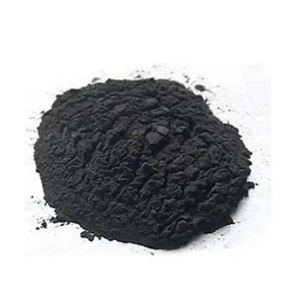
(Kini ipilẹ ipilẹ ati awọn ohun-ini ti graphite?)
Awọn ifiweranṣẹ ti o jọmọ
Ohun ti o fa Yika ti Graphite
Awọn ifojusọna Ohun elo gbooro ti Erogba Lile Ni aaye Ibi ipamọ Agbara
Graphite is useful in both industry and science
Ohun elo ti Silicates Ni Awọn ohun elo Imudaniloju Ooru-giga

Do Diamond And Graphite Have The Same Physical Properties Or Different Physical Properties?
