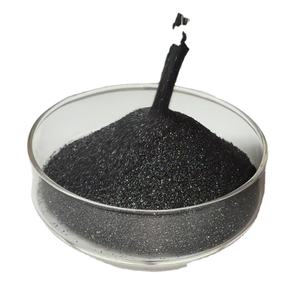
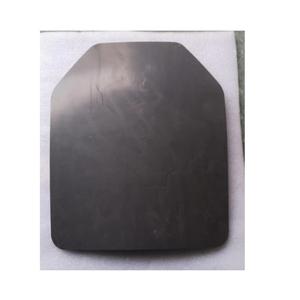
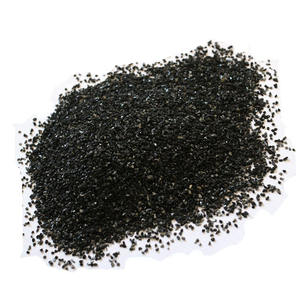
Taata hoo tao'a graphite toro'a, hoho'a no te EV, hinu, te umu e te tahi atu mau fare hamaniraa tauihaa.

Key materials for sodium-ion batteries include positive electrode materials, negative electrode materials, electrolytes, e te mau faataaraa.
Since the theoretical specific capacity of the positive electrode material is relatively low, it determines the battery’s capacity.
The negative electrode material affects the battery’s reaction kinetics, the electrolyte directly impacts the battery’s stability and safety, and the separator’s characteristics effectively improve battery operation safety while reducing the risk of combustion and explosion.
Āre'a, as crucial for constructing high-performance sodium-ion batteries, researchers need to conduct in-depth research on these four materials to prepare battery materials with excellent electrochemical performance and promising commercial applications.
The charging and discharging process of sodium-ion batteries involves the same reactions as that of lithium-ion batteries, both being intercalation/deintercalation reactions, i.e., the insertion/deintercalation of intercalated (Na+) ions into and out of the host crystal lattice (such as Na3V2(PO4)3). Because the host structure undergoes only minor structural reorganization during intercalation and deintercalation, maintaining its integrity, the reaction is considered locally regular.
The amount of deintercalation and the reversible intercalation/deintercalation cycle performance of the host structure determine the capacity and cycle life of the secondary battery.
The theoretical capacity of the material can be calculated according to equation (1-1).

In the formula, Ctheoretical represents the theoretical specific capacity; n represents the number of moles of lithium intercalated; F represents the Faraday constant; and M represents the molecular weight of the substance.
An ideal cathode material should possess the following characteristics.
- The intercalation reaction should have a large Gibbs free energy to maintain a large potential difference between the positive and negative electrodes, thus providing a higher battery voltage.
- Within a certain range, the change in ΔG during the sodium ion intercalation reaction is relatively small, indicating a large amount of sodium ion intercalation. The electrode potential is less dependent on the amount of intercalation, thus ensuring a higher electrochemical capacity and a more stable charge-discharge voltage for the battery.
- Crystals with layered or large-pore tunnel structures require sodium ions to have high diffusion and migration coefficients in the “interlayers” or “tunnels” to ensure a high diffusion rate, and good electronic conductivity to ensure good fast charge and discharge performance of the battery.
- During sodium ion insertion/extraction, the cathode material exhibits a small volume change, ensuring good cycle reversibility and improving battery cycle performance.
- Within the required charge/discharge potential range, the electrode and electrolyte solution exhibit good compatibility, meaning the electrode/electrolyte interface possesses excellent thermal, chemical, and electrochemical stability.
- Inexpensive, easy to store in air, environmentally friendly, and lightweight.
I teianei, typical sodium-ion battery cathode materials can be broadly classified into two categories. The first category comprises layered materials with anion-dense or quasi-dense structures.
The alternating layers between anion clusters are occupied by transition metal ions with redox properties, while sodium ions are embedded in the remaining inter-cluster vacancies. Representative cathode materials of the first category include Na1-xFeO2, P2-Na2/3[Fe1/2Mn1/2]O2, and Na0.9[Cu0.22Fe0.30Mn0.48]O2 [14].
The second category consists of materials with a more open structure. Polyanionic compounds (such as NaFePO4 and Na3V2(PO4)3F3) and metal-organic framework compounds (such as Prussian blue and its analogues) belong to this structure [17,18]. Due to their more compact crystal structure, the first category of materials has an essential advantage in energy storage per unit volume.
Āre'a, some second-category materials are more cost-effective.
Due to the large ionic radius of sodium ions and the preferential deposition of sodium over the formation of sodium-graphite intercalation compounds, graphite anode materials, which have been successfully applied in lithium-ion batteries, struggle to perform well in organic sodium-ion batteries. Āre'a, one of the main bottlenecks in the development of sodium-ion batteries remains the lack of suitable, commercially viable anode materials. I teianei, research on sodium-storage anode materials is extensive, and a series of high-performance anode materials (such as hard carbon, soft carbon, metal sulfides, titanium-based oxides, and alloy compounds) have been developed.
During the initial charging process, a reduction reaction of the electrolyte occurs on the surface of the negative electrode material (especially carbon materials), resulting in the deposition of insoluble sodium salts and the formation of a thin film, known as the SEI film. The SEI film allows sodium ions to migrate in while preventing solvent molecules from passing through. When the SEI film reaches a certain thickness, the electrode is isolated from the electrolyte. Simultaneously, due to the electronic insulation of the SEI film, the reduction reaction of the electrolyte is prevented, and the irreversible reaction caused by electrolyte decomposition ceases. While the formation of the SEI film allows for stable and reversible cycling in subsequent cycles, it also generates a significant amount of irreversible capacity in the first cycle. This lost capacity cannot be recovered in subsequent reversible cycles, leading to a reduction in the actual battery capacity.
Āre'a, an ideal sodium-ion anode material should not only have stable thermodynamic properties, but also good compatibility with the electrolyte, form a good SEI film with the electrolyte, and not react with the electrolyte after the SEI film is formed.

Sodium-ion battery electrolytes consist of three parts: electrolyte salt, solvent, and additives. The electrolyte salt is primarily a sodium salt, and its solubility in the solvent directly affects the number of charge carriers in the electrolyte. The redox potential plays a crucial role in the electrochemical window of the electrolyte system. The chemical inertness of the anions/cations in the sodium salt affects the stability of the separator, solvent, electrodes, and current collector, while the thermal stability of the sodium salt directly relates to battery safety. Sodium-ion electrolytes are mainly liquid, and common systems studied include organic electrolytes, aqueous electrolytes, and ionic electrolytes. An ideal electrolyte should possess the following characteristics.
- It exhibits a high ion migration rate and conductivity ranging from 3×10⁻³ to 2×10⁻² S·cm−1 over a wide temperature range.
- Good thermal stability, meaning the electrolyte does not decompose over a wide temperature range.
- High chemical stability, meaning the electrode does not react with the electrolyte.
- A wide electrochemical window, meaning that side reactions such as electrolyte decomposition do not occur during charging and discharging.
- It has good SEI (Self-Induced Intercalation) properties and can form a stable passivation film on the surface of the negative electrode material.
- Non-toxic, low vapor pressure, safe to use, easy to prepare, low cost, and environmentally friendly.
I teianei, organic electrolyte systems are the most widely studied. This system possesses characteristics such as high dielectric constant, low viscosity, a wide electrochemical window, and the ability to form a stable passivation film on the electrode surface during charge and discharge, making it considered the most suitable electrolyte for commercial sodium-ion batteries. To further improve material performance, film-forming additives and flame-retardant additives are often used in the electrolyte.
First-principles calculations (DFT) revealed that the reduction mechanism of ester electrolytes and additives is unstable and may cause electrode failure. Āre'a, the addition of fluoroethylene carbonate (FEC) preferentially generates NaF in both single-electron and two-electron reactions, thus forming a stable SEI film.
Roa, the addition of suitable additives can improve the performance of aqueous electrolytes. Moekara, using vinylene carbonate (VC) can form a protective film on the electrode surface, preventing O2 from entering and thus suppressing side reactions. Āre'a, using appropriate types and proportions of additives can improve interfacial stability, thereby achieving better cycle stability and rate performance.
To address safety concerns arising from sodium dendrite growth and poor thermal stability in organic electrolytes, researchers have proposed using solid-state electrolytes (SSEs) with excellent thermal stability, high mechanical strength, and a wide electrochemical window to construct highly safe sodium-ion batteries. I teianei, SSEs have achieved ionic conductivity of 10⁻² S·cm⁻¹ and an electrochemical window of 5 V. Āre'a, interfacial compatibility, high sodium-ion diffusion barriers, and processing difficulties still limit the further development of SSEs.

The separator is a crucial component of sodium-ion batteries, primarily functioning to isolate the positive and negative electrodes and prevent short circuits that could cause safety issues. I te horo'a i roto i, the separator also transports ions and isolates electrons. I teianei, commercially available lithium-ion battery separators are mainly made of polypropylene (PP) and polyethylene (PE), but both have poor thermal stability and mechanical properties, and poor wettability with sodium-ion battery electrolytes, making them unsuitable for use as separators. Laboratory research often uses glass fiber (GC) as a separator for sodium-ion batteries. This material offers good thermal stability, electrolyte compatibility, and a relatively low price, but its poor mechanical properties present challenges for commercial application. Separators suitable for future commercial use should at least meet the following requirements:
- Excellent chemical and electrochemical stability. Resistant to electrolyte corrosion while remaining stable in redox reactions.
- Thermodynamic stability. Able to withstand a certain degree of temperature change.
- The pore size is smaller than any particle structure in the dielectric, and the pore size is uniform.
- It has good wettability with electrolyte.
- It has good mechanical stability and can withstand a certain degree of deformation.
- Low production cost and low price.