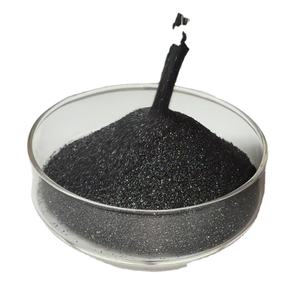
Taata hoo tao'a graphite toro'a, hoho'a no te EV, hinu, te umu e te tahi atu mau fare hamaniraa tauihaa.

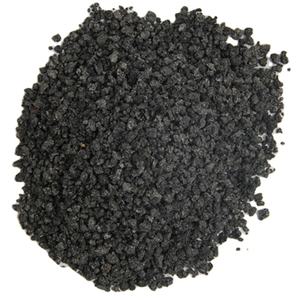
(Te mau rave'a haaparareraa parau no te mau EVs)
Te maraa noa ra te hinaaro i te EV, E ti'a i te feia hoo graphite ia haapapû e, ua navai te mau rave'a no te paturu i te hamaniraa i te mau pape pu'e lithium-ion. Te hinaaro i te graphite, o te faataa ra i te hoê ohipa faufaa 25% a 30% of an EV battery’s weight, is growing at an eye-watering pace driven by the rising appetite for electric vehicles.
While a number of factors are adding stability to graphite prices, a new development is especially notable. Unlike other commodities, which trade on a stock exchange, the market for graphite is opaque and therefore more resilient to speculation. Teie, combined with a new wave of investment and development in EV technology, has helped to steady graphite pricing.
A new company, Anovion Technologies, is set to build a graphite anode materials manufacturing plant in Decatur County. The company’s plant will produce synthetic graphite that is designed to meet the high energy density demands of EV batteries. Using the company’s patented process, Anovion will combine natural flake graphite with carbonaceous fillers to create a material that can be extruded into anode rods and baked to 1,000 degC, which completes the graphitization of the pitch binder.
The resulting anode has a very low surface area that reduces irreversible loss and increases battery performance. I te horo'a i roto i, the company’s material has been optimized for a range of lithium-ion battery chemistries. Its anode is less prone to thermal failure and can handle higher cell voltages and more cycles than the current industry standard. This enables Anovion to offer its customers a cost-effective alternative.

(Te mau rave'a haaparareraa parau no te mau EVs)