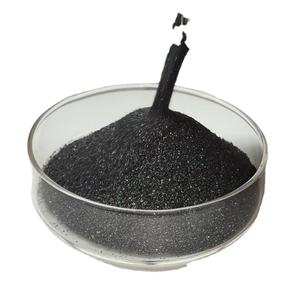
Proveedó profeshonal di material di grafit, grafito pa EV, greis, fornu i kualke otro industria.


(Kiko ta e historia di bateria di litio?)
R trempan&D of Lithium Batteries
Lithium batteries were first used in pacemakers. Lithium-ion batteries have the advantages of extremely low self-discharge rate and flat discharge voltage, so that the pacemaker implanted in the human body can operate for a long time without recharging. Lithium batteries generally have a nominal voltage higher than 3.0 volts and are more suitable for integrated circuit power supplies. Manganese dioxide batteries are widely used in calculators, kámaranan digital, and watches.
In order to develop varieties with better performance, various materials have been researched, resulting in unprecedented products.
Den 1992, Sony successfully developed lithium-ion batteries. Its practical application greatly reduces the weight and volume of portable electronic devices such as mobile phones, notebooks, and calculators.
What is the development process of lithium batteries?
Den 1970, M.S. Whittingham of Exxon used titanium sulfide as the positive electrode material and metal lithium as the negative electrode material to make the first lithium battery.
Den 1980, J. Goodenough discovered that lithium cobalt oxide can be used as a cathode material for lithium-ion batteries.
Den 1982, R.R. Agarwal and J.R. Selman of the Illinois Institute of Technology discovered that lithium ions have the property of intercalating graphite, a process that is fast and reversible. Na mes momento, the safety hazards of lithium batteries made of metal lithium have attracted much attention. P'esei, people have tried to use the characteristics of lithium ions embedded in graphite to make rechargeable batteries. The first usable lithium-ion graphite electrode was successfully trial-produced at Bell Laboratories.
Den 1983, M. Thackeray, J. Goodenough and others found that manganese spinel is an excellent cathode material with low price, stability and excellent conductivity and lithium conductivity. Its decomposition temperature is high, and its oxidizing property is much lower than that of lithium cobalt oxide. Even if there is a short circuit or overcharge, it can avoid the danger of burning and explosion.
Den 1989, A.Manthiram and J.Goodenough found that a positive electrode with a polymeric anion would produce a higher voltage.
Den 1991, Sony Corporation released the first commercial lithium-ion battery. Siguientemente, lithium-ion batteries revolutionized the face of consumer electronics.
Den 1996, Padhi and Goodenough found that phosphates with an olivine structure, such as lithium iron phosphate (LiFePO4), are more superior than traditional cathode materials, so they have become the current mainstream cathode materials.
With the widespread use of digital products such as mobile phones and notebook computers, lithium-ion batteries are widely used in such products with excellent performance, and are gradually developing into other product application fields.
Den 1998, Tianjin Power Research Institute began commercial production of lithium-ion batteries.
On July 15, 2018, it was learned from Keda Coal Chemistry Research Institute that a special carbon anode material for high-capacity and high-density lithium batteries with pure carbon as the main component came out in the institute. The cruising range of the car can exceed 600 kilometers.
In October 2018, the research group of Professor Liang Jiajie and Chen Yongsheng of Nankai University and the research group of Lai Chao of Jiangsu Normal University successfully prepared a silver nanowire-graphene three-dimensional porous carrier with a multi-level structure, and supported metal lithium as a composite anode material. This carrier can inhibit the formation of lithium dendrites, thereby enabling ultra-high-speed charging of batteries, which is expected to significantly extend the "lifetime" of lithium batteries.
High quality lithium batteries supplier
Luna di Ginger & Star New Energy Technology Co., LTD, fundá dia 11 di òktober. 17, 2008, ta un empresa di teknologia haltu komprometé na e investigashon i desaroyo, produkshon, prosesamentu, benta i servisio tékniko di materialnan di anodo di bateria di ion di litio. Despues di mas ku 10 aña di desaroyo, e kompania a desaroyá gradualmente den un struktura di produkto diversifiká ku grafit natural, grafit artifisial, grafit komposito, fase intermedio i otro materialnan negativo (materialnan di karbon di silikon, etc.). E produktonan ta wòrdu usá ampliamente den digital di ion di litio di kalidat haltu, baterianan di almasenamentu di energia i energia. Si bo ta buskando material di anodo di bateria di litio,klik riba e produktonan nesesario i manda nos un konsulta:sales@graphite-corp.com

(Kiko ta e historia di bateria di litio?)
POSTNAN RELASHONÁ

Katodo di Grafit pa Baterianan di EV
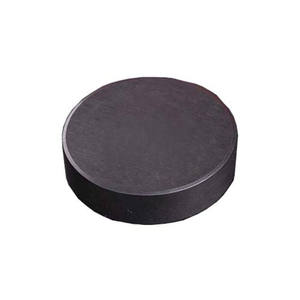
ta grafiet un elemento

kua grafiko di energia ta representá e transishon no-spontáneo di grafiet den diamante?
Rekisitonan Nobo pa Materialnan di Anodo den e Era di Baterianan di Estado Sólido
Kiko Ta E Diferensia Entre Fujikura Atmos Red 50/60 Shaft di Grafit