Cov kws tshaj lij graphite khoom siv, graphite rau EV, grease, cub thiab lwm yam kev lag luam.


KHOOM NTSUAS
Cov lus piav qhia
The fiber-clustered carbon nanotube (CFN) is a新型 material that combines the advantages of carbon纳米 tubes and fiber clusters. Here’s an overview of some key parameters related to CNFN:
(Fiber-clustered carbon nanotube)
Overview of Fiber-clustered carbon nanotube
Carbon nanotubes (CNTs) yog cylindrical nanostructures ua los ntawm ib daim ntawv ntawm dov-up graphene, ob-dimensional lattice ntawm carbon atoms. Tshawb pom hauv 1991, CNTs nthuav tawm cov khoom txawv tshaj plaws vim lawv cov qauv molecular tshwj xeeb, ua rau lawv yog ib qho ntawm cov khoom siv uas muaj kev cia siab tshaj plaws hauv nanotechnology. Lawv tuaj yeem ua ib leeg-phab ntsa (SWCNTs) lossis ntau phab ntsa (MWCNTs), uas sib txawv hauv tus naj npawb ntawm cov pa roj carbon concentric.
Features of Fiber-clustered carbon nanotube
Exceptional Strength and Stiffness: CNTs are among the strongest and stiffest materials known, with tensile strengths up to 60 times greater than steel.
Lightweight: Despite their strength, CNTs are extremely lightweight, with a density close to that of graphite.
High Thermal and Electrical Conductivity: They can conduct heat and electricity far better than copper, silver, or gold, with electrons flowing freely along the tube’s length.
Chemically Inert: CNTs are highly resistant to chemical reactions and corrosion, maintaining their properties in harsh environments.
Flexibility: They can be bent or twisted without breaking, displaying excellent flexibility alongside their strength.
Large Surface Area: CNTs have an incredibly high surface area to volume ratio, enhancing their effectiveness in adsorption and catalytic applications.

(Fiber-clustered carbon nanotube)
Parameter of Fiber-clustered carbon nanotube
The fiber-clustered carbon nanotube (CFN) is a material that combines the advantages of carbon tubes and fiber clusters. Here’s an overview of some key parameters related to CNFN:
1. Size: CNFNs can be of various sizes, ranging from sub-10nm to nanometers. The optimal size depends on the application and desired mechanical properties.
2. Structure: CFN has a unique structure with a single layer of carbon atoms arranged in a longsheet shape. The atoms can interact strongly with each other due to their length. This makes CFNs excellent for applications such as high-speed communication, sensors, and wearable devices.
3. Performance:CFNs exhibit high performance in several areas, including:
– Conductivity: High levels of conductivity make them ideal for applications where conductivity is crucial.
– Optics:CFNs have good optical performance due to their ability to manipulate light at different wavelengths.
– Detecting properties:CFNs can detect very small changes in magnetic fields or electromagnetic radiation.
4. Applications:CFNs have wide applications in various industries, including:
-: They can be used to store and transmit electricity through fibers, improving electrical efficiency and reducing power consumption.
– Automation: CFNs can be used to automate various tasks such as controlling electronic systems, making them more efficient and cost-effective.
– Wearable devices:CFNs can be used to develop new types of wearable devices that can sense and respond to various stimuli.
– Environmental monitoring: CFNs can be used to monitor environmental variables such as temperature, pressure, and humidity.
Overall,CFNs offer a promising alternative to traditional materials for a variety of applications, highlighting their flexibility, robustness, and potential for significant technological advancements in the near future.
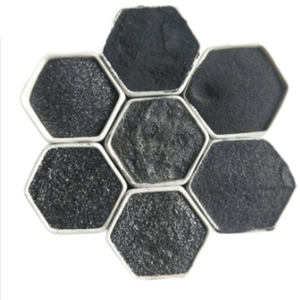
(Fiber-clustered carbon nanotube)
Applications of Fiber-clustered carbon nanotube
Electronics: Used in transistors, sensors, and displays due to their high conductivity and small size, potentially revolutionizing electronics miniaturization.
Composite Materials: Mixed with polymers to create lightweight, strong composites for aerospace, tsheb, thiab cov khoom siv kis las.
Energy Storage: In batteries and supercapacitors, CNTs improve energy storage capacity and charge/discharge rates.
Biomedical: As drug delivery vehicles, tissue engineering scaffolds, and in biomedical sensors due to their biocompatibility and unique transport properties.
Catalysts: Their large surface area makes CNTs efficient catalyst supports and catalysts themselves in various chemical reactions.
Environmental Remediation: Utilized for water purification and air filtration due to their adsorptive properties for contaminants.
Lub Tuam Txhab Profile
Graphite-Corp yog tus neeg muag khoom thoob ntiaj teb ntseeg siab ntawm cov khoom siv tshuaj & chaw tsim tshuaj paus nrog ntau tshaj 12 xyoo kev paub muab cov khoom lag luam zoo graphite hmoov thiab graphene cov khoom lag luam.
Lub tuam txhab muaj lub tuam tsev tshaj lij thev naus laus zis thiab Lub Tsev Haujlwm Saib Xyuas Kev Zoo, chav kuaj muaj cuab yeej zoo, thiab tau nruab nrog cov khoom siv kuaj siab thiab lub chaw pabcuam cov neeg siv khoom.
Yog tias koj tab tom nrhiav rau cov hmoov graphite zoo thiab cov khoom lag luam cuam tshuam, thov koj xav tiv tauj peb lossis nyem rau ntawm cov khoom koj xav tau xa cov lus nug.
Txoj Kev Them Nyiaj
L / C, T / T, Western Union, PayPal, Credit Card, thiab lwm yam.
Kev xa khoom
Nws tuaj yeem xa los ntawm hiav txwv, los ntawm huab cua, los yog npaj ASAP thaum tau txais kev them nyiaj.
FAQs of Fiber-clustered carbon nanotube
Q: Is Fiber-clustered carbon nanotube safe for human health and the environment?
A: Concerns have been raised about the potential toxicity of CNTs, particularly their respirable forms, which may resemble asbestos fibers. Research is ongoing to establish safe handling practices and assess long-term environmental impacts.
Q: How is Fiber-clustered carbon nanotube produced?
A: There are several methods to produce CNTs, including arc discharge, laser ablation, and chemical vapor deposition (CVD), CVD yog txoj hauv kev feem ntau rau kev tsim khoom lag luam..
Q: Can Fiber-clustered carbon nanotube be seen with the naked eye?
A: Tsis yog., Vim tias lawv cov nanoscale loj, (feem ntau 1-100 tsuas yog ob peb nanometers hauv txoj kab uas hla,), CNTs tsis pom rau lub qhov muag liab qab thiab yuav tsum tau pom electron microscopy..
Q: Is Fiber-clustered carbon nanotube expensive?
A: Keeb kwm,, CNTs kim heev vim tias cov txheej txheem synthesis nyuaj.. Txawm li cas los xij,, kev nce qib hauv txoj kev tsim khoom tau txo tus nqi,, txawm hais tias lawv tseem kim dua li ntau cov ntaub ntawv ib txwm muaj..
Q: How does Fiber-clustered carbon nanotube compare to graphene?
A: Ob qho tib si yog cov qauv ntawm cov pa roj carbon nrog cov khoom tshwj xeeb,, tab sis graphene yog daim ntawv tiaj tiaj, whereas CNTs yog cov raj.. Graphene muab zoo dua nyob rau hauv-dav hlau conductivity., while CNTs excel in out-of-plane conductivity and have additional mechanical advantages due to their tubular structure.

(Fiber-clustered carbon nanotube)
(Fiber-clustered carbon nanotube)
THOV IB NQE LUS
RELATED PRODUCTS

Single Wall Nanotubes High heat conduction Carbon nanotubes for membranes

Ultrapure 95% 20-30nm Multi Walled Carbon Nanotubes Powder MWCNTs with Length 10-30um
1PCS 20*17mm round carbon fiber tube/hollow carbon tube/carbon fiber tube is used to fix the tripod of agricultural spray drone
Light Weight Carbon Tube Shaft 40mm 50mm 60mm 70mm 80mm 2 Meters long Carbon Fiber Tubing

High-performing Conductive Additive Multi-walled Carbon Nanotubes for Batteries