


Профессиональ графит материалы менән тәьмин итеүсе, графит өсөн Э.В., майлау, мейес һәм башҡа теләһә ниндәй тармаҡтар.


ПРОДУКТ ПАРАМЕТРҘАРЫ
Васиф
The fiber-clustered carbon nanotube (CFN) is a新型 material that combines the advantages of carbon纳米 tubes and fiber clusters. Here’s an overview of some key parameters related to CNFN:
(Fiber-clustered carbon nanotube)
Overview of Fiber-clustered carbon nanotube
Carbon nanotubes (CNTs) are cylindrical nanostructures consisting of a single sheet of rolled-up graphene, a two-dimensional lattice of carbon atoms. 1945 йылда асылған. 1991, CNTs exhibit extraordinary properties due to their unique molecular structure, making them one of the most promising materials in nanotechnology. They can be single-walled (SWCNTs) or multi-walled (MWCNTs), differing in the number of concentric carbon layers.
Features of Fiber-clustered carbon nanotube
Exceptional Strength and Stiffness: CNTs are among the strongest and stiffest materials known, with tensile strengths up to 60 times greater than steel.
Lightweight: Despite their strength, CNTs are extremely lightweight, with a density close to that of graphite.
High Thermal and Electrical Conductivity: They can conduct heat and electricity far better than copper, silver, or gold, with electrons flowing freely along the tube’s length.
Химик яҡтан инерт: CNTs are highly resistant to chemical reactions and corrosion, maintaining their properties in harsh environments.
Flexibility: They can be bent or twisted without breaking, displaying excellent flexibility alongside their strength.
Large Surface Area: CNTs have an incredibly high surface area to volume ratio, enhancing their effectiveness in adsorption and catalytic applications.

(Fiber-clustered carbon nanotube)
Parameter of Fiber-clustered carbon nanotube
The fiber-clustered carbon nanotube (CFN) is a material that combines the advantages of carbon tubes and fiber clusters. Here’s an overview of some key parameters related to CNFN:
1. Size: CNFNs can be of various sizes, ranging from sub-10nm to nanometers. The optimal size depends on the application and desired mechanical properties.
2. Structure: CFN has a unique structure with a single layer of carbon atoms arranged in a longsheet shape. The atoms can interact strongly with each other due to their length. This makes CFNs excellent for applications such as high-speed communication, sensors, and wearable devices.
3. Performance:CFNs exhibit high performance in several areas, including:
– Conductivity: High levels of conductivity make them ideal for applications where conductivity is crucial.
– Optics:CFNs have good optical performance due to their ability to manipulate light at different wavelengths.
– Detecting properties:CFNs can detect very small changes in magnetic fields or electromagnetic radiation.
4. Applications:CFNs have wide applications in various industries, including:
-: They can be used to store and transmit electricity through fibers, improving electrical efficiency and reducing power consumption.
– Automation: CFNs can be used to automate various tasks such as controlling electronic systems, making them more efficient and cost-effective.
– Wearable devices:CFNs can be used to develop new types of wearable devices that can sense and respond to various stimuli.
– Environmental monitoring: CFNs can be used to monitor environmental variables such as temperature, pressure, and humidity.
Дөйөм алғанда,CFNs offer a promising alternative to traditional materials for a variety of applications, highlighting their flexibility, robustness, and potential for significant technological advancements in the near future.
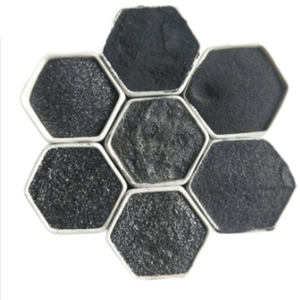
(Fiber-clustered carbon nanotube)
Applications of Fiber-clustered carbon nanotube
Электроника: Used in transistors, sensors, and displays due to their high conductivity and small size, potentially revolutionizing electronics miniaturization.
Composite Materials: Mixed with polymers to create lightweight, strong composites for aerospace, автомобиль, һәм спорт ҡорамалдары ..
Энергияны һаҡлау: In batteries and supercapacitors, CNTs improve energy storage capacity and charge/discharge rates.
Biomedical: As drug delivery vehicles, tissue engineering scaffolds, and in biomedical sensors due to their biocompatibility and unique transport properties.
Catalysts: Their large surface area makes CNTs efficient catalyst supports and catalysts themselves in various chemical reactions.
Environmental Remediation: Utilized for water purification and air filtration due to their adsorptive properties for contaminants.
Компания профиле
Графит-Корп - ышаныслы глобаль химик материалдар менән тәьмин итеүсе & йылдан ашыу етештереүсе супер юғары сифатлы графит порошогы һәм графен продукцияһы менән тәьмин итеү тәжрибәһе.
Компанияла профессиональ техник бүлек һәм сифатты күҙәтеү бүлеге бар ., яҡшы йыһазландырылған лаборатория, һәм алдынғы һынау ҡорамалдары һәм һатыуҙан һуң клиенттарҙы хеҙмәтләндереү үҙәге менән йыһазландырылған.
Әгәр һеҙ эҙләгән юғары сифатлы графит порошок һәм сағыштырмаса продукция, рәхим итеп, беҙҙең менән бәйләнешкә инергә йәки кәрәкле продукцияға баҫып, һорау ебәрергә.
Түләү ысулдары
Л/С, Т/Т, Көнбайыш союзы, Пейпал, Кредит картаһы һ.б..
Йөк ташыу
Уны диңгеҙ юлы менән ташырға мөмкин ине ., һауа юлы менән, йәки асыҡлау ASAP тиҙ арала түләү квитанцияһы.
FAQs of Fiber-clustered carbon nanotube
Q: Is Fiber-clustered carbon nanotube safe for human health and the environment?
А: Concerns have been raised about the potential toxicity of CNTs, particularly their respirable forms, which may resemble asbestos fibers. Research is ongoing to establish safe handling practices and assess long-term environmental impacts.
Q: How is Fiber-clustered carbon nanotube produced?
А: There are several methods to produce CNTs, including arc discharge, laser ablation, and chemical vapor deposition (Йөрәк-йөрәк ауырыуы), with CVD being the most common for industrial-scale production.
Q: Can Fiber-clustered carbon nanotube be seen with the naked eye?
А: Юҡ, due to their nanoscale dimensions (typically 1-100 nanometers in diameter), CNTs are invisible to the naked eye and require electron microscopy for visualization.
Q: Is Fiber-clustered carbon nanotube expensive?
А: Historically, CNTs were very expensive due to complex synthesis processes. Әммә, advances in production methods have lowered costs, though they remain more expensive than many conventional materials.
Q: How does Fiber-clustered carbon nanotube compare to graphene?
А: Both are forms of carbon with exceptional properties, but graphene is a flat sheet while CNTs are tubes. Graphene offers superior in-plane conductivity, while CNTs excel in out-of-plane conductivity and have additional mechanical advantages due to their tubular structure.

(Fiber-clustered carbon nanotube)
(Fiber-clustered carbon nanotube)
ЦИТАТА ҺОРАҒЫҘ
БАЙЛАНЫШЛЫ ПРОДУКТТАР
polyimide film heater 5v carbon nanotube film infrared heating panel pi film for auto parts
High-quality carbon nanotubes The average tube diameter of CNT powers can reach 8nm
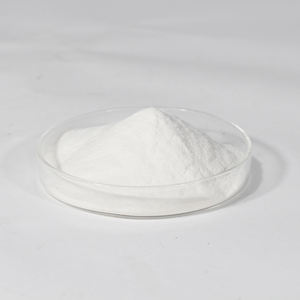
High quality Carbon Nanotubes High Specific Surface Area BET Carbon Nanotubes for Sensors
Industrial Grade 95% Purity Mwcnts Powder 5-15nm Multi Walled Carbon Nanotubes Columnar Activated Carbon

ECO Aerotube & Nanotube—Aquarium Kit/Acrylic Suspended Aquariums/Filtration Carbon
