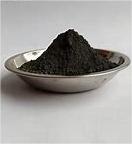
Kaiwhakarato rauemi graphite ngaio, kauwhata mo EV, hinuhinu, oumu me etahi atu ahumahi.


(Te Pūhiko Anode Graphite)
Ko te pākahiko anode graphite te rangatira o nga LIB mai i to ratau whanautanga 30 tau ki muri, ka whai hua mai i tana toenga pai o te utu, wātea, te kaha me te kaha o te kaha. Despite intense research on alternatives with better performance, the incomparable properties of graphite as lithium-ion intercalation host have made it a key component of commercial LIBs.
The performance of graphite in the anode is achieved through its long-range-ordered layered structure and electrochemical intercalation/deintercalation of lithium ions. This process produces high theoretical reversible capacity (372.0 mAh g-1) and excellent cycle life. I te nuinga, the graphite anode has good stability owing to its large surface area and high conductivity.
Heoi ano, the performance of graphite in LIBs still has some room for improvement. A major factor is its low first cycle irreversible capacity loss, which limits the high rate capability of commercial LIBs. The current research is focusing on improving the anode material’s morphology to reduce the capacity loss.
This involves modifying the graphite particle morphology to increase the surface area and shortening the pathway of ionic diffusion. Another research is focusing on adding conductive additives to the anode material, which can enhance its overall electrochemical performance notably.
I tua atu, the recycling of spent GA should attract continuous attention for resource conservation and pollution prevention purposes. It is also necessary to develop approaches for enhancing the anode material reutilization and increasing its performance. This will not only reduce the dependence on overseas GA but also save costs and environmental pollution.

(Te Pūhiko Anode Graphite)
NGA WHAKAPUTANGA

Me pehea te Hoahoa Huanga Whakawera Kawhata
Te Hoahoa Me te Whakakotahitanga o nga Kaihanga Hiriwa Hou
Me pehea te Whakarite i te Rahora Mower mo te Mapu Kawhata
Relationship Between Structural Regulation And Performance Of Hard Carbon Materials
Kauwhata i roto i te Toi: Nga Whakamahinga me nga Hangarau