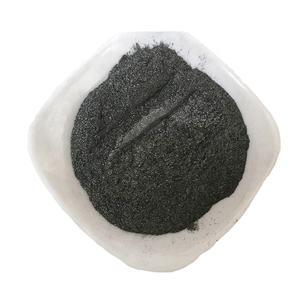
Dausoli iyaya ni graphite kenadau, grafiti me baleta na EV, waiwai, furnace kei na dua tale na cakacaka.

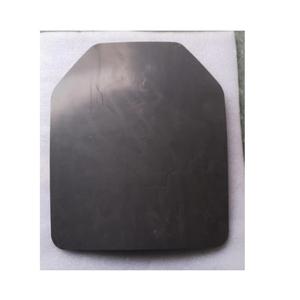
(Na cava e dodonu mo kila me baleta na kalavo amorfo?)
Amorphous graphite e dua na ka vakasakiti sara kei na vuqa na iyau duatani kei na itovo ., ka dau vakayagataki vakalevu ena veivanua duidui. Ena itukutuku oqo ., let's explore the physical and chemical properties, preparation methods, and application fields of amorphous graphite.
1, Physical and chemical properties of amorphous graphite
Amorphous graphite is an amorphous carbon material composed of graphite microcrystals and amorphous carbon. It has the following main physical and chemical properties:
Structure: The structure of amorphous graphite is different from that of crystalline graphite. In amorphous graphite, graphite microcrystals and amorphous carbon are interwoven to form a continuous three-dimensional network structure. This structure enables amorphous graphite to have high hardness, kaukauwa, kei na veivakacacani.
Kena tuvani: The main component of amorphous graphite is carbon, with a content of up to 98%. In addition, It also contains tiny quantities of elements like nitrogen, okisijini, hydrogen as well as sulfur. The presence of these elements can affect the properties of amorphous graphite, such as increasing its conductivity and chemical activity.
Na iyau vakayago: The physical properties of amorphous graphite include high hardness, high density, kaukauwa cecere, and good conductivity. Its hardness can be comparable to diamond, with a density of 2.0-2.2g/cm3 and higher strength than glass fiber. In addition, amorphous graphite also has good conductivity and chemical stability.
Na itovo ni kemikali: Amorphous graphite has relatively stable chemical properties and can resist oxidation and corrosion at high temperatures. It does not react with substances such as acids, yavu, and salts at high temperatures but can undergo combustion in high temperature oxygen rich environments.
2, Preparation method of amorphous graphite
There are various methods for preparing amorphous graphite, mainly including the following:
Chemical Vapor Deposition (CVD): This method involves depositing carbon-containing gases (such as methane) onto the substrate surface through the action of a catalyst at a certain temperature and pressure to form amorphous graphite. The advantages of this method are fast preparation speed, savasava cecere, and high cost.
Pyrolysis method: This method involves pyrolysis of organic compounds at high temperatures, resulting in gases containing carbon elements that are deposited into amorphous graphite at lower temperatures. The advantages of this method are simple preparation low cost, but low purity and thickness.
Pulse Laser Deposition (PLD): This method uses a pulsed laser beam to irradiate the surface of the target material, causing molecules or atoms on the surface of the target material to sputter out and deposit amorphous graphite on the substrate surface. The advantages of this method are fast preparation speed, savasava cecere, and high equipment cost.
Plasma-enhanced chemical vapor deposition (PECVD): This method involves dissociating carbon-containing gases into atoms or molecules through the action of plasma at a certain temperature and pressure and depositing amorphous graphite on the surface of the substrate. The advantages of this method are fast preparation speed, savasava cecere, kei na isau lailai ..
3, Application Fields of Amorphous Graphite
Due to its unique properties and characteristics, amorphous graphite is widely used in various fields. The following are the main application areas of amorphous graphite:
Battery field: Amorphous graphite is widely used as a positive and negative electrode material for batteries due to its good conductivity and chemical stability. For example, it can be used as a negative electrode material for lithium-ion batteries, with advantages such as high capacity and long lifespan.
Semiconductor field: Amorphous graphite has good conductivity and chemical stability and can be used as a thin film material in semiconductor manufacturing processes. For example, it can be used as an electrode material for thin film resistors thin film capacitors, and as a protective layer for semiconductor devices.
High-temperature material field: Amorphous graphite can maintain stability at high temperatures and is widely used in the field of high-temperature materials. For example, it can serve as a heating element for high-temperature furnaces, a catalyst carrier for high-temperature reactions, kei na so tale.
The field of wear-resistant materials: Amorphous graphite is extensively used as wear resistance material because of its toughness and excellent wear resistance. For example, it can be used as a surface coating material for mechanical components such as bearings and gears, improving their service life and reducing wear.
Me vakalekalekataki, amorphous graphite is a very important material with many unique properties and characteristics and is widely used in various fields. In the future, with the continuous development of science and technology, the application prospects of amorphous graphite will be even broader.
High quality amorphous graphene supplier
Graphite-corp kabani HQ e dua na kabani cecere ni tekinolaji e vakaitavi ena vakadidike kei na veivakatorocaketaki ., ivoli, cakacakataki, ventas y servicios técnicos de litio ion batería anode materiales, Eda sa cecere na ivakatagedegede ni graphite supplier.Our Kabani e dua na ituvatuva ni ka e duidui kei na graphite vakayago, kalavo buli, karafaiti cokovata, iwasewase e loma kei na so tale na iyaya ca (iyaya ni silikoni kaboni, kei na so tale.). Na ivoli e vakayagataki vakalevu ena cecere-iotioti ni lithium ion digitaki ., kaukauwa kei na batiri ni maroroi kaukauwa. Kevaka o vakasaqara tiko na pauta ni graphene ., kerea mo veitaratara mai. Se kiliki ena veika e gadrevi ka vakauta mai vei keda e dua na vakatataro ..

(Na cava e dodonu mo kila me baleta na kalavo amorfo?)
VEIWEKANI VEIWEKANI
Vosa ni iyaya ni veilakoyaki: Vakalasikati na Ebags kenadau Slim Laptop taga ni iyaya — Heathered kalavo me vaka e dua na iyaya vakatamata.
Vakarautaki kei na kena vakayagataki na iyaya ni Nano-silicate
Vuli ena veitaqomaki kei na tudei ni iyaya ni batiri ni sodium .

Na sala me vakarautaki kina na koula ni Mold ni Grafite
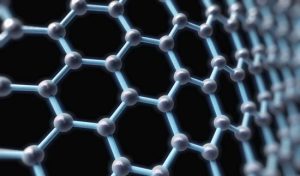
Na veika e vakavuna na isau ni Graphite .