


Dausoli iyaya ni graphite kenadau, grafiti me baleta na EV, waiwai, furnace kei na dua tale na cakacaka.

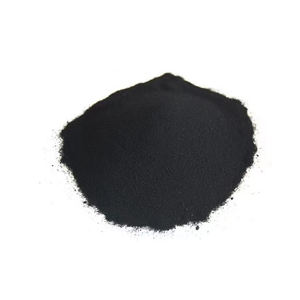
(Na iyaya ni anode—litio ion bate grafita)
litio ion bate grafita, kilai talega me batiri ni idabedabe ni veisau, na kena veitiki bibi na electrode vinaka ., elekitirodi ca, separador y electrolite. Ena gauna oqo, the positive electrode of lithium-ion power lithium battery generally adopts spinel type LiMn2O4 or nickel-based oxide, the negative electrode is mainly graphite, and the electrolyte is a carbonate (EC, EMC) organic solution containing LiPF6. LiMn2O4 is considered to be the safest material and the cheapest cathode material, and has been adopted by many types of power lithium battery. Li(NiCo)O2 has high capacity, but poor safety performance. It needs to be modified by doping and limiting its use voltage to improve its safety performance. From the perspective of vehicle safety and battery cost, lithium iron phosphate LiFePO4 has good safety and Long life is the most suitable lithium-ion battery cathode material for automotive power lithium battery.
The energy density of lithium-ion battery depends to a large extent on the anode material. From the commercialization of lithium-ion battery to the present, the anode materials used are the most mature, and the most widely used are carbon materials, of which the most important is still graphite. Graphite has a six-membered ring carbon network layered structure, carbon-carbon is SP2 hybridized, and the layers are connected by molecular force. Two different crystal structures exist in graphite: hexahedral graphite (2H) and rhombohedral graphite (3R). The 2H phase has the characteristic stacking of ABABA, and the stacking structure of the 3R phase is ABCABC. The two phases can be transformed into each other. The 2H phase is thermodynamically stable and is more abundant in graphite, accounting for about four-fifths of the total. Among the anode materials for lithium-ion battery, natural graphite and artificial graphite have always been the most used anode materials. Due to the high temperature treatment of graphite in the production process, the production cost is greatly increased and the environment is adversely affected. Compared with artificial graphite, natural graphite has many advantages. It has low cost, cecere na karisitala, purification, crushing and classification. The technology is mature, the charging and discharging voltage platform is low, and the theoretical specific capacity is high, which has laid a good foundation for its application in the lithium-ion battery industry.
High quality lithium ion battery graphite graphite supplier
Vula Jini & Star vou ni kaukauwa ni tekinolaji Co., LTD, tauyavutaki ena Okotova . 17, 2008, e dua na kabani cecere ni tekinolaji e vakaitavi ena vakadidike kei na veivakatorocaketaki ., ivoli, cakacakataki, volivolitaki kei na veiqaravi vakatekinoloji ni iyaya ni anode ni grafite, we are high quality graphite anode supplier. Our Company has a diversified product structure with natural graphite, kalavo buli, karafaiti cokovata, iwasewase e loma kei na so tale na iyaya ca (iyaya ni silikoni kaboni, kei na so tale.). Na ivoli e vakayagataki vakalevu ena cecere-iotioti ni lithium ion digitaki ., kaukauwa kei na batiri ni maroroi kaukauwa.
If you are looking for lithium ion battery graphite powder, kerea mo veitaratara mai. Se kiliki ena veika e gadrevi ka vakauta mai vei keda e dua na vakatataro .: volivolitaki@karafaiti-kabani.com.

(Na iyaya ni anode—litio ion bate grafita)
VEIWEKANI VEIWEKANI

Na kena vinaka kei na kena ca ni EDM .

Cakacaka ni karisitala: Na sala me caka kina e dua na karisitala ni silikoni ena kena vakayagataki na pauta ni kalavo .
Vakayagataki ni Graphene ena vakadidike ni iyaya ni vakawaicalataka
Na Buloko ni Taravale .: Na cava e caka kina na kalavo?
Vakayagataki ni silicates ena wai ni veiqaravi ni iyaya ni vakadidike
