


Propesyonal na tagapagtustos ng materyal na grapayt, grapayt para sa EV, mantika, pugon at anumang iba pang industriya.


MGA PARAMETER NG PRODUKTO
Paglalarawan
The parameter of carbon nanotubes CNT paper and bucky paper for battery material depends on the specific application and requirements.
(Carbon Nanotubes CNT Paper Bucky Paper for Battery Material)
Overview of Carbon Nanotubes CNT Paper Bucky Paper for Battery Material
Carbon nanotubes (CNTs) are cylindrical nanostructures consisting of a single sheet of rolled-up graphene, a two-dimensional lattice of carbon atoms. Natuklasan sa 1991, CNTs exhibit extraordinary properties due to their unique molecular structure, making them one of the most promising materials in nanotechnology. They can be single-walled (SWCNTs) or multi-walled (MWCNTs), differing in the number of concentric carbon layers.
Features of Carbon Nanotubes CNT Paper Bucky Paper for Battery Material
Exceptional Strength and Stiffness: CNTs are among the strongest and stiffest materials known, with tensile strengths up to 60 times greater than steel.
Lightweight: Despite their strength, CNTs are extremely lightweight, with a density close to that of graphite.
High Thermal and Electrical Conductivity: They can conduct heat and electricity far better than copper, silver, or gold, with electrons flowing freely along the tube’s length.
Inert sa kemikal: CNTs are highly resistant to chemical reactions and corrosion, maintaining their properties in harsh environments.
Flexibility: They can be bent or twisted without breaking, displaying excellent flexibility alongside their strength.
Large Surface Area: CNTs have an incredibly high surface area to volume ratio, enhancing their effectiveness in adsorption and catalytic applications.

(Carbon Nanotubes CNT Paper Bucky Paper for Battery Material)
Parameter of Carbon Nanotubes CNT Paper Bucky Paper for Battery Material
The parameter of carbon nanotubes CNT paper and bucky paper for battery material depends on the specific application and requirements.
Sa pangkalahatan, the properties of carbon nanotubes CNT paper and bucky paper in terms of electrical conductivity, mechanical strength, thermal stability, and chemical resistance can be tailored to meet the needs of various battery applications, such as lithium-ion batteries, hydrogen fuel cells, and solid-state batteries.
Halimbawa, CNTs have high electrical conductivity due to their unique electronic structure, which allows them to act as both an electrode and a mediator between other materials. This property makes them useful for applications where charge separation is important, such as in supercapacitors and high-capacity batteries.
Bucky paper, on the other hand, has a higher mechanical strength and lower thermal stability compared to CNTs. This means that it can be used in battery designs that require high mechanical performance and robustness, such as those used in electric vehicles and power tools.
Sa wakas, both CNTs and bucky paper have good chemical resistance, making them suitable for use in battery materials that need to withstand exposure to chemicals or environmental conditions.
Sa pangkalahatan, the choice of carbon nanotubes CNT paper and bucky paper for battery material will depend on the specific requirements of the battery application and the desired performance characteristics of the battery. It is recommended to carefully consider these factors when selecting a suitable material for your particular application.
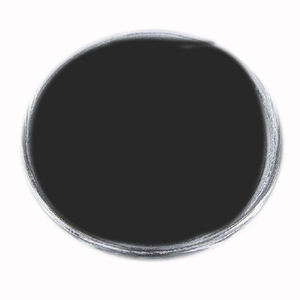
(Carbon Nanotubes CNT Paper Bucky Paper for Battery Material)
Applications of Carbon Nanotubes CNT Paper Bucky Paper for Battery Material
Electronics: Used in transistors, sensors, and displays due to their high conductivity and small size, potentially revolutionizing electronics miniaturization.
Composite Materials: Mixed with polymers to create lightweight, strong composites for aerospace, sasakyan, at kagamitang pang-sports.
Imbakan ng Enerhiya: In batteries and supercapacitors, CNTs improve energy storage capacity and charge/discharge rates.
Biomedical: As drug delivery vehicles, tissue engineering scaffolds, and in biomedical sensors due to their biocompatibility and unique transport properties.
Catalysts: Their large surface area makes CNTs efficient catalyst supports and catalysts themselves in various chemical reactions.
Environmental Remediation: Utilized for water purification and air filtration due to their adsorptive properties for contaminants.
Profile ng Kumpanya
Ang Graphite-Corp ay isang pinagkakatiwalaang global chemical material supplier & tagagawa na may higit sa 12 taong karanasan sa pagbibigay ng napakataas na kalidad ng graphite powder at mga produktong graphene.
Ang kumpanya ay may isang propesyonal na teknikal na departamento at Quality Supervision Department, isang mahusay na kagamitang laboratoryo, at nilagyan ng advanced na kagamitan sa pagsubok at after-sales customer service center.
Kung naghahanap ka ng mataas na kalidad na graphite powder at mga kamag-anak na produkto, mangyaring huwag mag-atubiling makipag-ugnay sa amin o mag-click sa mga kinakailangang produkto upang magpadala ng isang pagtatanong.
Mga Paraan ng Pagbabayad
L/C, T/T, Western Union, Paypal, Credit Card atbp.
Pagpapadala
Maaari itong ipadala sa pamamagitan ng dagat, sa pamamagitan ng hangin, o sa pamamagitan ng pagbubunyag sa lalong madaling panahon pagkatapos ng resibo ng pagbabayad.
FAQs of Carbon Nanotubes CNT Paper Bucky Paper for Battery Material
Q: Is Carbon Nanotubes CNT Paper Bucky Paper for Battery Material safe for human health and the environment?
A: Concerns have been raised about the potential toxicity of CNTs, particularly their respirable forms, which may resemble asbestos fibers. Research is ongoing to establish safe handling practices and assess long-term environmental impacts.
Q: How is Carbon Nanotubes CNT Paper Bucky Paper for Battery Material produced?
A: There are several methods to produce CNTs, including arc discharge, laser ablation, and chemical vapor deposition (CVD), with CVD being the most common for industrial-scale production.
Q: Can Carbon Nanotubes CNT Paper Bucky Paper for Battery Material be seen with the naked eye?
A: No, due to their nanoscale dimensions (typically 1-100 nanometers in diameter), CNTs are invisible to the naked eye and require electron microscopy for visualization.
Q: Is Carbon Nanotubes CNT Paper Bucky Paper for Battery Material expensive?
A: Historically, CNTs were very expensive due to complex synthesis processes. Gayunpaman, advances in production methods have lowered costs, though they remain more expensive than many conventional materials.
Q: How does Carbon Nanotubes CNT Paper Bucky Paper for Battery Material compare to graphene?
A: Both are forms of carbon with exceptional properties, but graphene is a flat sheet while CNTs are tubes. Graphene offers superior in-plane conductivity, while CNTs excel in out-of-plane conductivity and have additional mechanical advantages due to their tubular structure.

(Carbon Nanotubes CNT Paper Bucky Paper for Battery Material)
(Carbon Nanotubes CNT Paper Bucky Paper for Battery Material)
HUMILING NG QUOTE
MGA KAUGNAY NA PRODUKTO

16mm Carbon Nanotubes Micropore Nano Rubber Oxygen Air Diffuser Tube Aeration Hose Use With Ring Blower
Whole huayunxin RE6 6mm carbon nanotube composite material diaphragm mini TWS IEM earphone speaker dynamic driver unit
Hydroxylated multi-walled carbon nanotubes Reduce the battery internal resistance

3K Roll Wrapped 100% Carbon Hollow Tubing for Bag making machine Accessories

Big singlewalled and double walled Carbon Nanotubes / CNTs with best quality and high purity
