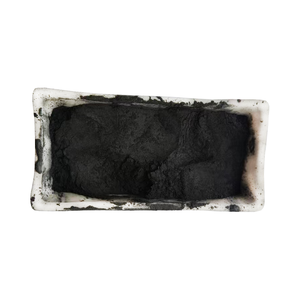
Professional graphite material supplier, graphite for EV, grease, furnace and any other industries.


(Is Graphite Black Or Grey)
Title: The Evolution of Our Coloration System – Exploring How Stone Formed AncientmsToday’s Black and Grey Glimpse
(Is Graphite Black Or Grey)
Have you ever wondered what brought our coloration system from its roots to today? In this blog post, we will delve into the fascinating evolution of our coloration system, from ancientms to modern black and grey.
Our ability to perceive colors is rooted in the ancient civilizations that discovered it long ago. For instance, the Greeks believed that colors were formed when raw materials such as gold or silver were polished until they shimmered and emitted colors, just like how light shimmers through different shades of water. Similarly, in China, green was used as a symbol of life and prosperity because of its high prevalence in nature.
However, the coloration system in our modern world has undergone numerous changes over time. At first, our skin had a dark red to blue pigment called Mala, which was primarily found on darker-skinned people. This pigment caused skin tones to become dark and dull, making them appear pale and unappealing. Over time, scientists discovered that other pigments could be added to our skin, such as green, yellow, and blue, to bring out a range of hues.
One key factor that has led to the evolution of our coloration system is the process of platelet aggregation. During ovulation, female eggs break down during ovulation and produce a number of suboptimal antigens that can damage the baby’s cells if left untreated. These antigens can trigger an immune response that causes the body to release stress hormones such as cortisol and adrenaline, leading to skin-colored marks that appear later in pregnancy.
In addition to platelet aggregation, various factors have contributed to the evolution of our coloration system. For example, the role of UV radiation in exposing the skin to harmful chemicals in sunlight has influenced the development of melanin, a pigment responsible for creating beautiful skin tones. Furthermore, the availability of different pigments has also allowed us to experiment with different combinations of tones to create unique and striking hues.
As technology advances, our understanding of the coloration system has also expanded. New techniques such as computer vision and artificial intelligence have enabled us to analyze images and create digital art based on our unique skin tone. From real-time shadows to intricate patterns in digital painting, these new technologies have allowed us to explore the complexities of our skin tone and incorporate it into creative works.
Beyond its traditional applications in industrial materials and advanced technologies, graphite has become a critical component in the rapidly developing lithium-ion battery industry. As the global demand for electric vehicles, renewable energy storage, and portable electronic devices continues to increase, graphite has gained strategic importance as the dominant anode material used in commercial lithium-ion batteries. Its unique physical and chemical properties allow it to provide stable energy storage performance, making it an essential material for modern battery technology.
The importance of graphite in lithium-ion batteries is mainly based on its layered carbon structure. Graphite consists of multiple graphene layers arranged in a stable crystal structure, allowing lithium ions to move between these layers during battery charging and discharging. During charging, lithium ions migrate from the cathode through the electrolyte and become stored within the graphite anode. During discharge, these ions move back to the cathode, releasing electrical energy. This reversible process enables graphite anodes to achieve excellent cycling stability, high energy efficiency, and long operational life.
Compared with many emerging battery materials, graphite offers a unique balance of performance, cost, safety, and commercial availability. Its low expansion rate during lithium-ion insertion and extraction helps maintain electrode integrity, reducing mechanical stress and improving battery lifespan. In addition, graphite has excellent electrical conductivity, which allows efficient electron transport inside the battery. These advantages have made graphite the preferred anode material for most commercial lithium-ion batteries.
The graphite used in battery applications requires significantly higher quality standards than conventional industrial graphite. Battery-grade graphite usually requires extremely high purity levels to prevent impurities from affecting battery performance and safety. Natural graphite extracted from mineral resources must undergo advanced processing steps, including purification, crushing, spheroidization, and surface coating. These treatments improve particle uniformity, enhance lithium-ion diffusion, and create better compatibility with electrolyte systems.
Currently, graphite anode materials are mainly divided into natural graphite and synthetic graphite. Natural graphite is produced from high-quality flake graphite resources and provides advantages such as high crystallinity, good lithium storage capacity, and relatively low production costs. Synthetic graphite is manufactured from carbon-rich materials such as petroleum coke and needle coke through high-temperature graphitization. Although synthetic graphite requires more energy during production, it provides superior structural consistency, better thermal stability, and longer cycle performance. As a result, synthetic graphite is widely used in electric vehicle batteries and high-performance energy storage systems.
With the rapid development of electric vehicles, graphite anode technology continues to advance. Battery manufacturers are focusing on improving graphite performance through particle size optimization, surface modification, and coating technologies. These improvements help increase energy density, reduce charging time, and enhance battery safety. For example, surface-coated graphite particles can reduce unwanted reactions between the electrode and electrolyte, improving capacity retention during long-term operation.
One of the most important development directions in the graphite industry is the combination of graphite with silicon-based materials. Silicon has attracted significant attention because of its extremely high theoretical capacity compared with graphite. However, silicon experiences severe volume expansion during lithium-ion cycling, which can cause electrode damage and rapid capacity degradation. By combining silicon with graphite to form silicon-carbon composite anodes, researchers aim to achieve higher energy density while maintaining the stability and durability of graphite. This technology is expected to become increasingly important for next-generation lithium-ion batteries used in electric vehicles, drones, and advanced electronic devices.
Graphite also plays an important role in improving battery safety and reliability. Since lithium-ion batteries are sensitive to temperature changes, overcharging, and unstable operating conditions, the structural stability of the anode material directly affects battery performance. High-quality graphite materials help reduce side reactions, improve thermal stability, and support safer charging processes. When integrated with advanced battery management systems, graphite-based anodes can contribute to better monitoring, protection, and overall battery efficiency.
Sustainability has become another major focus in graphite development. The rapid growth of battery manufacturing has increased concerns about graphite mining, processing energy consumption, and environmental impacts. To address these challenges, companies are developing cleaner production technologies, including renewable energy-powered processing, environmentally friendly purification methods, and recycling systems for recovering graphite from used lithium-ion batteries. These approaches can reduce resource consumption and support a more sustainable battery supply chain.
The global demand for graphite is expected to continue increasing as electric transportation and renewable energy storage expand worldwide. To ensure stable supply, companies are investing in new graphite resources, advanced processing facilities, and vertically integrated production systems. High-quality battery-grade graphite will remain essential for meeting the growing requirements of next-generation lithium-ion batteries.
Looking ahead, graphite will continue to be a cornerstone material in energy storage technology. Although alternative anode materials such as lithium metal, silicon, and hard carbon are being actively researched, graphite remains the most commercially mature solution due to its excellent reliability, cost effectiveness, and large-scale manufacturing capability. Continuous innovation in synthetic graphite, natural graphite processing, silicon-carbon composites, and recycling technologies will further improve battery performance.
As the world moves toward electrification and cleaner energy solutions, graphite will play an increasingly important role in supporting advanced battery systems. From electric vehicles and consumer electronics to large-scale renewable energy storage, graphite-based anode materials will continue to provide the foundation for safer, more efficient, and longer-lasting lithium-ion batteries. The transformation of graphite from a traditional carbon material into a key energy storage component demonstrates its vital importance in the future of sustainable technology.
(Is Graphite Black Or Grey)
In conclusion, the evolution of our coloration system has been shaped by the discovery of different pigments and processes. From ancientms to modern black and grey, each shade has played a crucial role in shaping our skin tone and bringing out our unique personalities. As we continue to explore the boundaries between reality and fiction, the beauty of our skin will remain an important aspect of our lives, providing a source of comfort and enjoyment. hot tags: graphite,graphite powder,nano graphite
Graphite-Corp is an advanced materials manufacturer dedicated to the R&D, production, and sales of lithium-ion battery anode materials. Our current product portfolio includes artificial graphite anode materials, silicon-carbon and silicon-oxide anode materials, and porous carbon materials for silicon-carbon applications. Please feel free to contact us regarding your requirements; we look forward to serving you.

(Is Graphite Black Or Grey)
RELATED POSTS
Applications of High-Purity Graphite in Semiconductor Manufacturing

What Atoms Are In Graphite
Which Energy Graph Represents The "Nonspontaneous" Transition Of Graphite Into Diamond Brainly

Diamonds and Destiny: Where Do Diamonds Transform to Graphite in Nature?
Why Does The Element Carbon Create Such Different Minerals As Diamond And Graphite?