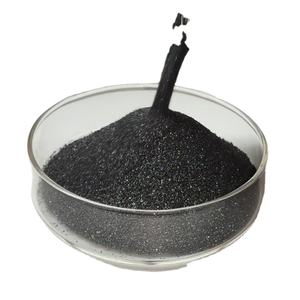
Professional graphite material supplier, graphite for EV, grease, furnace and any other industries.

The Growing Importance of Hard Carbon Anode Material for Sodium Ion Battery
With the rapid growth of electric vehicles (EVs), renewable energy storage systems, and smart grid applications, the global demand for advanced battery technologies continues to increase. Although lithium-ion batteries currently dominate the energy storage market, concerns related to lithium resource availability, raw material costs, and supply chain stability have accelerated the development of alternative battery technologies.
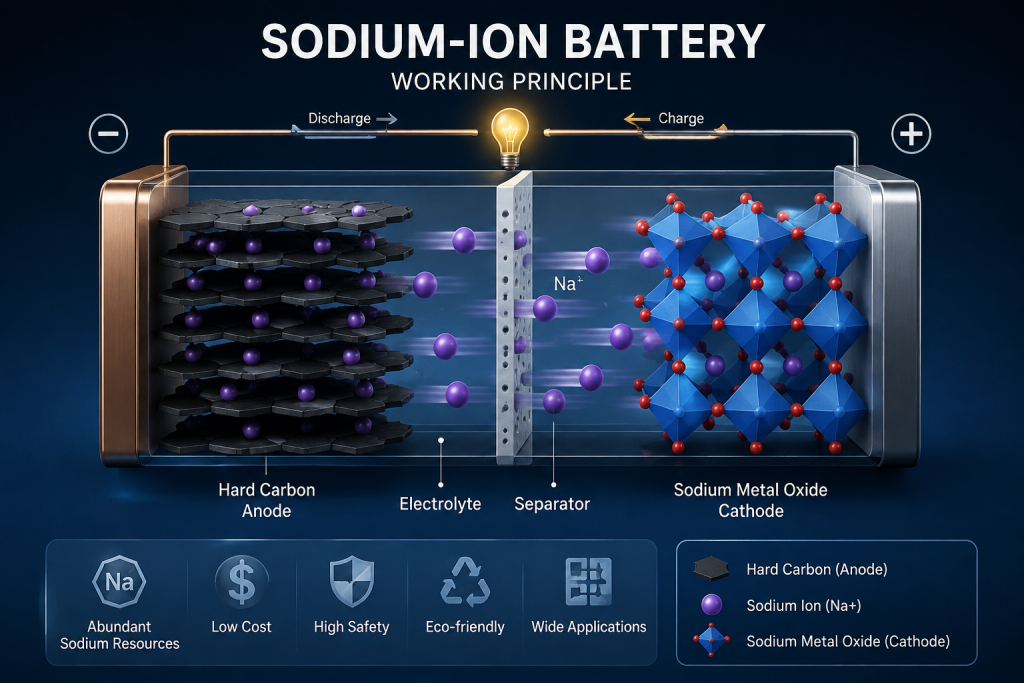
Among various emerging technologies, sodium ion batteries (SIBs) have attracted significant attention due to their abundant sodium resources, cost advantages, and environmental benefits. Unlike lithium-ion batteries that mainly use graphite as the anode material, sodium ions have a larger ionic radius, making traditional graphite unsuitable for efficient sodium storage. As a result, Hard Carbon Anode Material for Sodium Ion Battery has become one of the most promising solutions for commercial sodium-ion battery applications.
Hard carbon offers excellent sodium storage capability, structural stability, and cost advantages, making it a key material supporting the industrialization of sodium-ion battery technology.
What Is Hard Carbon Anode Material?
Hard carbon is a type of non-graphitizable carbon material that maintains a disordered carbon structure even after high-temperature carbonization. Unlike graphite, which has a highly ordered layered structure, hard carbon contains:
- Randomly arranged graphene-like layers
- Nanopores and closed pores
- Defect structures
- Expanded interlayer spacing
These unique structural characteristics provide suitable storage sites for sodium ions.
During battery charging, sodium ions can be stored through several mechanisms:
- Sodium ion adsorption on carbon defects
- Sodium ion insertion between carbon layers
- Sodium filling inside nanopores
This multi-storage mechanism enables hard carbon to achieve higher reversible capacity compared with traditional carbon materials used for sodium-ion batteries.
Why Hard Carbon Is Suitable for Sodium Ion Batteries
1. High Sodium Storage Capacity
One of the biggest advantages of hard carbon anode material is its high reversible capacity.
Because sodium ions cannot effectively intercalate into graphite layers, graphite anodes show poor electrochemical performance in sodium-ion batteries. Hard carbon, with its larger layer spacing and porous structure, provides more active sites for sodium storage.
Typical commercial hard carbon materials can achieve:
- High reversible capacity
- Stable cycling performance
- Improved sodium ion diffusion
These properties make hard carbon the preferred anode candidate for sodium-ion batteries.
2. Abundant and Low-Cost Raw Materials
Another important advantage of Hard Carbon Anode Material for Sodium Ion Battery is the flexibility of raw materials.
Hard carbon can be produced from various carbon precursors, including:
Biomass-based Precursors
Examples include:
- Coconut shells
- Wood
- Bamboo
- Agricultural waste
- Cellulose materials
Advantages:
- Renewable resources
- Low carbon footprint
- Low production cost
Petroleum-Based Precursors
Examples include:
- Petroleum coke
- Pitch materials
- Phenolic resin
Advantages:
- Stable supply
- Good carbon yield
- Suitable for industrial-scale production
The diversity of precursors provides manufacturers with multiple production pathways for customized hard carbon materials.
Manufacturing Process of Hard Carbon Anode Material
The production process of hard carbon usually includes several key steps:
1. Raw Material Selection
The precursor determines the final properties of hard carbon, including:
- Carbon structure
- Porosity
- Defect concentration
- Initial Coulombic efficiency (ICE)
Selecting suitable precursors is critical for achieving high-performance sodium-ion battery anodes.
2. Carbonization Process
The precursor material is heated under an inert atmosphere, usually nitrogen or argon.
During carbonization:
- Organic compounds decompose
- Carbon networks form
- Porous structures develop
Temperature control significantly affects:
- Specific capacity
- Surface area
- Sodium storage behavior
3. Surface Modification and Optimization
To improve electrochemical performance, manufacturers may apply additional treatments:
- Surface coating
- Pore structure adjustment
- Particle size optimization
- Oxygen functional group control
These technologies help improve:
- Initial Coulombic efficiency
- Rate capability
- Cycle life
Key Performance Parameters of Hard Carbon Anode Materials
For battery manufacturers and material buyers, several technical indicators are essential:
1. Specific Capacity
Specific capacity determines how much energy the battery can store.
Higher capacity hard carbon materials can improve sodium-ion battery energy density.
2. Initial Coulombic Efficiency (ICE)
ICE is one of the most important indicators for commercial applications.
A higher ICE means:
- Less sodium loss during the first cycle
- Better full-cell energy efficiency
- Improved battery performance
3. Particle Size Distribution (PSD)
PSD affects:
- Electrode processing
- Slurry stability
- Energy density
- Rate performance
A controlled particle size distribution helps achieve better manufacturing consistency.
4. Microstructure Analysis (SEM)
Scanning Electron Microscopy (SEM) analysis is commonly used to evaluate:
- Particle morphology
- Surface structure
- Porosity characteristics
For battery material qualification, customers often request SEM images, PSD data, BET surface area, and electrochemical test results.
Applications of Sodium Ion Batteries Using Hard Carbon
1. Energy Storage Systems (ESS)
Stationary energy storage is considered one of the most promising applications for sodium-ion batteries.
Advantages include:
- Lower cost
- Better resource availability
- Improved safety
Potential applications:
- Solar energy storage
- Wind energy storage
- Grid balancing systems
2. Electric Vehicles and Low-Speed Mobility
Although lithium-ion batteries still dominate high-end EV applications, sodium-ion batteries may become competitive in:
- Low-cost electric vehicles
- Electric buses
- Two-wheel vehicles
- Short-range transportation
Hard carbon anode materials can help reduce battery costs while maintaining acceptable performance.
3. Backup Power Systems
Sodium-ion batteries combined with hard carbon anodes are also suitable for:
- Data centers
- Communication backup systems
- Industrial energy storage
Their safety and cost advantages make them attractive for large-scale deployment.
Challenges of Hard Carbon Anode Materials
Despite its advantages, hard carbon still faces several challenges:
Lower Initial Coulombic Efficiency
The large surface area and defects can cause irreversible sodium consumption during the first charge-discharge cycle.
Improving ICE remains a major research direction.
Structural Optimization
The relationship between:
- Closed pores
- Defects
- Layer spacing
- Sodium storage mechanism
needs further optimization.
Researchers are continuing to explore advanced structural design strategies to improve practical battery performance.
Large-Scale Manufacturing Consistency
For commercial applications, manufacturers need to achieve:
- Stable raw material supply
- Consistent batch quality
- High production efficiency
- Competitive cost
Future Development Outlook of Hard Carbon Anode Material for Sodium Ion Battery
As global demand for affordable and sustainable energy storage increases, sodium-ion batteries are expected to become an important supplement to lithium-ion battery technology.
Hard Carbon Anode Material for Sodium Ion Battery will continue to develop toward:
- Higher capacity
- Higher initial efficiency
- Lower production cost
- Better cycle stability
- Large-scale commercial production
Future improvements in precursor selection, carbon structure engineering, and surface modification technologies will further enhance the competitiveness of sodium-ion batteries.
Conclusion
Hard Carbon Anode Material for Sodium Ion Battery is one of the most important materials driving the commercialization of sodium-ion battery technology. With advantages including abundant resources, low cost, excellent sodium storage capability, and structural stability, hard carbon provides a practical pathway for next-generation energy storage solutions.
For battery manufacturers, energy storage companies, and material suppliers, developing high-performance hard carbon materials with optimized capacity, ICE, PSD, and microstructure control will be essential for capturing future opportunities in the rapidly growing sodium-ion battery market.
RELATED POSTS

What Year Did Callaway Use The Ust Mamiya Recoil Es 450 Graphite With Big Beryha Combo Sets?

New dual-gradient graphite anode material material realizes fast charging of lithium battery

Advantages and Disadvantages of Graphite
Global Research Progress on the Compatibility of Anode Materials and Electrolytes
How Does Graphite Transfer Paper Work