


Umthengisi wezinto eziphathekayo zegraphite, igraphite ye-EV, igrisi, iziko kunye nawo nawaphi na amanye amashishini.


IIPARAMETHA ZEMVELISO
Inkcazo
MWCNTs are nanoscale materials that have unique properties due to their multi-walled structure. Some of the parameters that describe MWCNTs include:
(Multi-Walled Carbon Nanotubes (Single Double walled Carbon Nanotubes MWCNT))
Overview of Multi-Walled Carbon Nanotubes (Single Double walled Carbon Nanotubes MWCNT)
Carbon nanotubes (CNTs) are cylindrical nanostructures consisting of a single sheet of rolled-up graphene, a two-dimensional lattice of carbon atoms. Ifunyenwe kwi 1991, CNTs exhibit extraordinary properties due to their unique molecular structure, making them one of the most promising materials in nanotechnology. They can be single-walled (SWCNTs) or multi-walled (MWCNTs), differing in the number of concentric carbon layers.
Features of Multi-Walled Carbon Nanotubes (Single Double walled Carbon Nanotubes MWCNT)
Exceptional Strength and Stiffness: CNTs are among the strongest and stiffest materials known, with tensile strengths up to 60 times greater than steel.
Lightweight: Despite their strength, CNTs are extremely lightweight, with a density close to that of graphite.
High Thermal and Electrical Conductivity: They can conduct heat and electricity far better than copper, silver, or gold, with electrons flowing freely along the tube’s length.
Inert ngokwekhemikhali: CNTs are highly resistant to chemical reactions and corrosion, maintaining their properties in harsh environments.
Flexibility: They can be bent or twisted without breaking, displaying excellent flexibility alongside their strength.
Large Surface Area: CNTs have an incredibly high surface area to volume ratio, enhancing their effectiveness in adsorption and catalytic applications.
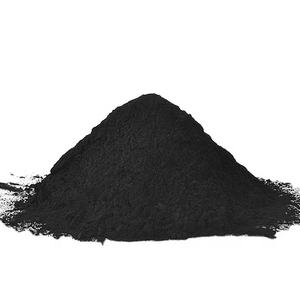
(Multi-Walled Carbon Nanotubes (Single Double walled Carbon Nanotubes MWCNT))
Parameter of Multi-Walled Carbon Nanotubes (Single Double walled Carbon Nanotubes MWCNT)
MWCNTs are nanoscale materials that have unique properties due to their multi-walled structure. Some of the parameters that describe MWCNTs include:
* Number of layers: The number of layers in a single-walled carbon nanotube is typically between 1 kwaye 6, although this can vary depending on the specific material.
* Width of the tubes: The width of the MWCNTs is typically between 20 kwaye 30 nm, but this can also vary depending on the material.
* Length of the tubes: The length of the MWCNTs is typically several hundred nanometers, although this can vary depending on the material.
* Grain size: The grain size of the MWCNTs is typically ranging from 1 to 10 nanometers.
* Atomic structure: The atomic structure of the MWCNTs can vary depending on the specific material, but they are generally composed of carbon atoms arranged in a lattice-like structure.
* Porosity: The porosity of the MWCNTs can range from very low to very high, with lower porosity typically corresponding to larger MWCNTs.
* Magnetic properties: The magnetic properties of the MWCNTs can vary depending on the specific material, but they are generally weakly magnetic and can be manipulated using external magnetic fields.
Kuko konke, these parameters provide insight into the structure and behavior of MWCNTs, which has applications in fields such as electronics, energy storage, and drug delivery.
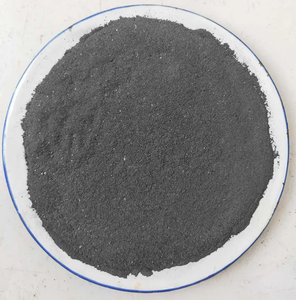
(Multi-Walled Carbon Nanotubes (Single Double walled Carbon Nanotubes MWCNT))
Applications of Multi-Walled Carbon Nanotubes (Single Double walled Carbon Nanotubes MWCNT)
Ezombane: Used in transistors, sensors, and displays due to their high conductivity and small size, potentially revolutionizing electronics miniaturization.
Composite Materials: Mixed with polymers to create lightweight, strong composites for aerospace, iimoto, kunye nezixhobo zemidlalo.
Ugcino lwamandla: In batteries and supercapacitors, CNTs improve energy storage capacity and charge/discharge rates.
Biomedical: As drug delivery vehicles, tissue engineering scaffolds, and in biomedical sensors due to their biocompatibility and unique transport properties.
Catalysts: Their large surface area makes CNTs efficient catalyst supports and catalysts themselves in various chemical reactions.
Environmental Remediation: Utilized for water purification and air filtration due to their adsorptive properties for contaminants.
Iprofayile yekhampani
IGraphite-Corp ngumboneleli othembekileyo wehlabathi jikelele wezinto zekhemikhali & umenzi onamava angaphezulu kweminyaka eli-12 ekuboneleleni ngomgubo wegraphite okumgangatho ophezulu ophezulu kunye neemveliso zegraphene.
Inkampani inesebe lobuchwephesha lobuchwephesha kunye neSebe lokuLawula uMgangatho, ilabhoratri enezixhobo ezifanelekileyo, kwaye ixhotyiswe ngezixhobo zokuvavanya eziphambili kunye neziko lenkonzo yabathengi emva kokuthengisa.
Ukuba ujonge umgubo wegraphite okumgangatho ophezulu kunye neemveliso ezinxulumeneyo, nceda uzive ukhululekile ukuqhagamshelana nathi okanye ucofe kwiimveliso ezifunekayo ukuthumela umbuzo.
Iindlela zokuhlawula
L/C, T/T, uwestern Union, I-Paypal, Ikhadi letyala njl.
Ukuthunyelwa ngenqanawa
Yayinokuthunyelwa ngolwandle, ngomoya, okanye ngokutyhila ngokukhawuleza emva kokuba kufunyenwe irisithi yentlawulo.
FAQs of Multi-Walled Carbon Nanotubes (Single Double walled Carbon Nanotubes MWCNT)
Q: Is Multi-Walled Carbon Nanotubes (Single Double walled Carbon Nanotubes MWCNT) safe for human health and the environment?
A: Concerns have been raised about the potential toxicity of CNTs, particularly their respirable forms, which may resemble asbestos fibers. Research is ongoing to establish safe handling practices and assess long-term environmental impacts.
Q: How is Multi-Walled Carbon Nanotubes (Single Double walled Carbon Nanotubes MWCNT) iveliswe?
A: There are several methods to produce CNTs, including arc discharge, laser ablation, and chemical vapor deposition (CVD), with CVD being the most common for industrial-scale production.
Q: Can Multi-Walled Carbon Nanotubes (Single Double walled Carbon Nanotubes MWCNT) be seen with the naked eye?
A: No, due to their nanoscale dimensions (typically 1-100 nanometers in diameter), CNTs are invisible to the naked eye and require electron microscopy for visualization.
Q: Is Multi-Walled Carbon Nanotubes (Single Double walled Carbon Nanotubes MWCNT) expensive?
A: Historically, CNTs were very expensive due to complex synthesis processes. Nangona kunjalo, advances in production methods have lowered costs, though they remain more expensive than many conventional materials.
Q: How does Multi-Walled Carbon Nanotubes (Single Double walled Carbon Nanotubes MWCNT) compare to graphene?
A: Both are forms of carbon with exceptional properties, but graphene is a flat sheet while CNTs are tubes. Graphene offers superior in-plane conductivity, while CNTs excel in out-of-plane conductivity and have additional mechanical advantages due to their tubular structure.
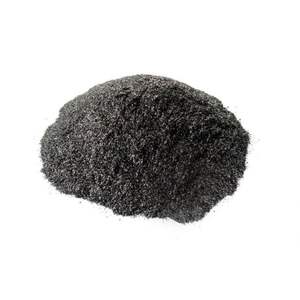
(Multi-Walled Carbon Nanotubes (Single Double walled Carbon Nanotubes MWCNT))
(Multi-Walled Carbon Nanotubes (Single Double walled Carbon Nanotubes MWCNT))
CELA ISICATSHULWA
IIMVELISO EZINXULUMENEYO

Factory Manufacture 3K Twill Matte Carbon Tube 1000mm 1200mm 1500mm Custom 3K Twill Matte CFRP Tubes For RC Airplane Drone
Graphene enhanced conductive and thermal plastic carbon nanotubes super wear-resistant superconducting ABS

Carbon Nanotube Activated Carbon Powder Lead Carbon For Supercapacitor
Custom Lightweight Carbon Fiber Tube High Strength 1000mm Carbon Fiber Tube for Survey Pole

High Purity Single Walled Carbon Nanotubes Powder For R&D
