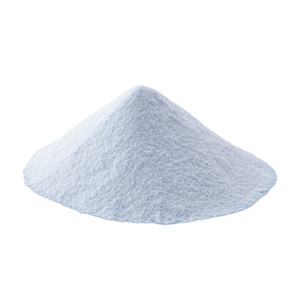
Таъминкунандаи касбии маводи графит, графит барои EV, равѓан кардан, печь ва дигар сохахои саноат.

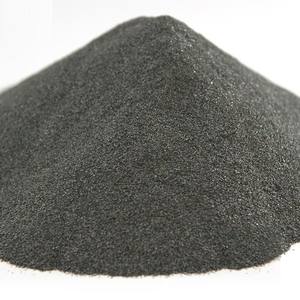
ПАРАМЕТРХОИ МАХСУЛОТ
Тавсифи
The “CARBON Nanotubes” parameter refers to the carbon nanotube (CNT) concentration used in nanotechnology applications. Carbon nanotubes have unique properties due to their high surface area, low density, and tunable electronic, magnetic, and thermal conductivity.
(CARBON NANOTUBES CNT)
Overview of CARBON NANOTUBES CNT
Carbon nanotubes (CNTs) are cylindrical nanostructures consisting of a single sheet of rolled-up graphene, a two-dimensional lattice of carbon atoms. Discovered in 1991, CNTs exhibit extraordinary properties due to their unique molecular structure, making them one of the most promising materials in nanotechnology. They can be single-walled (SWCNTs) or multi-walled (MWCNTs), differing in the number of concentric carbon layers.
Features of CARBON NANOTUBES CNT
Exceptional Strength and Stiffness: CNTs are among the strongest and stiffest materials known, with tensile strengths up to 60 times greater than steel.
Lightweight: Despite their strength, CNTs are extremely lightweight, with a density close to that of graphite.
High Thermal and Electrical Conductivity: They can conduct heat and electricity far better than copper, silver, or gold, with electrons flowing freely along the tube’s length.
Chemically Inert: CNTs are highly resistant to chemical reactions and corrosion, maintaining their properties in harsh environments.
Flexibility: They can be bent or twisted without breaking, displaying excellent flexibility alongside their strength.
Large Surface Area: CNTs have an incredibly high surface area to volume ratio, enhancing their effectiveness in adsorption and catalytic applications.
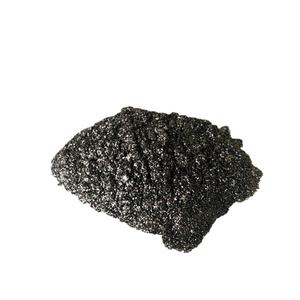
(CARBON NANOTUBES CNT)
Parameter of CARBON NANOTUBES CNT
The “CARBON Nanotubes” parameter refers to the carbon nanotube (CNT) concentration used in nanotechnology applications. Carbon nanotubes have unique properties due to their high surface area, low density, and tunable electronic, magnetic, and thermal conductivity.
The concentration of CNTs can vary depending on factors such as the fabrication method, synthesis conditions, and desired properties of the final product. Generally speaking, the higher the CNT concentration, the more features and functionalities it may provide.
It is important to note that the choice of CNT concentration can affect the performance and reliability of nanodevices, so careful optimization of the CNT concentration is necessary for successful nanotechnology applications.
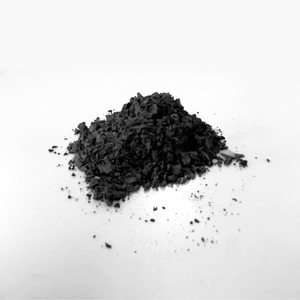
(CARBON NANOTUBES CNT)
Applications of CARBON NANOTUBES CNT
Electronics: Used in transistors, sensors, and displays due to their high conductivity and small size, potentially revolutionizing electronics miniaturization.
Composite Materials: Mixed with polymers to create lightweight, strong composites for aerospace, automotive, and sports equipment.
Energy Storage: In batteries and supercapacitors, CNTs improve energy storage capacity and charge/discharge rates.
Biomedical: As drug delivery vehicles, tissue engineering scaffolds, and in biomedical sensors due to their biocompatibility and unique transport properties.
Catalysts: Their large surface area makes CNTs efficient catalyst supports and catalysts themselves in various chemical reactions.
Environmental Remediation: Utilized for water purification and air filtration due to their adsorptive properties for contaminants.
Чеҳраи Ширкат
Graphite-Corp is a trusted global chemical material supplier & истеҳсолкунанда бо таҷрибаи зиёда аз 12-сола дар таъмини хокаи графитҳои баландсифат ва маҳсулоти графен.
Ширкат дорои шӯъбаи касбии техникӣ ва шӯъбаи назорати сифат мебошад, лабораторияи хуб чихозонидашуда, ва бо таҷҳизоти пешрафтаи санҷишӣ ва маркази хидматрасонии муштариён пас аз фурӯш муҷаҳҳаз шудааст.
Агар шумо дар ҷустуҷӯи хокаи графити баландсифат ва маҳсулоти нисбӣ бошед, Лутфан озодона бо мо тамос гиред ё маҳсулоти заруриро клик кунед, то дархост ирсол кунед.
Усулҳои пардохт
L/C, Т/Т, Вестерн Юнион, Paypal, Корти кредитӣ ва ғ.
Интиқол
Онро тавассути баҳр интиқол додан мумкин аст, бо хаво, ё бо роҳи ошкор кардани ҳарчи зудтар пас аз гирифтани пардохт.
FAQs of CARBON NANOTUBES CNT
С: Is CARBON NANOTUBES CNT safe for human health and the environment?
А: Concerns have been raised about the potential toxicity of CNTs, particularly their respirable forms, which may resemble asbestos fibers. Research is ongoing to establish safe handling practices and assess long-term environmental impacts.
С: How is CARBON NANOTUBES CNT produced?
А: There are several methods to produce CNTs, including arc discharge, laser ablation, and chemical vapor deposition (CVD), with CVD being the most common for industrial-scale production.
С: Can CARBON NANOTUBES CNT be seen with the naked eye?
А: No, due to their nanoscale dimensions (typically 1-100 nanometers in diameter), CNTs are invisible to the naked eye and require electron microscopy for visualization.
С: Is CARBON NANOTUBES CNT expensive?
А: Historically, CNTs were very expensive due to complex synthesis processes. Аммо, advances in production methods have lowered costs, though they remain more expensive than many conventional materials.
С: How does CARBON NANOTUBES CNT compare to graphene?
А: Both are forms of carbon with exceptional properties, but graphene is a flat sheet while CNTs are tubes. Graphene offers superior in-plane conductivity, while CNTs excel in out-of-plane conductivity and have additional mechanical advantages due to their tubular structure.
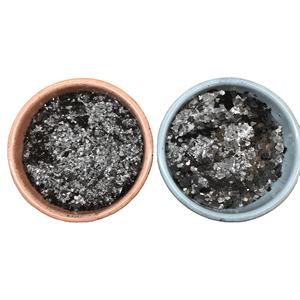
(CARBON NANOTUBES CNT)
(CARBON NANOTUBES CNT)
Иқтибосро дархост кунед
МАХСУЛОТИ ТАМОМИ

Hot ing carbon nanotube ultrafine coating ink usage pigment carbon black
CNTs-TPU masterbatch carbon nanotube master batch factory with good
High thermal conductivity strong tensile carbon nanotubes for Rubber
High Temperature Resistant Carbon Fiber Hollow Round Tube For Mechanical Parts
High strength high temperature resistance carbon braided tube tubular for wire and cable assembly