Professional graphite material supplier, graphite for EV, grease, furnace and any other industries.





PRODUCT PARAMETERS
Description
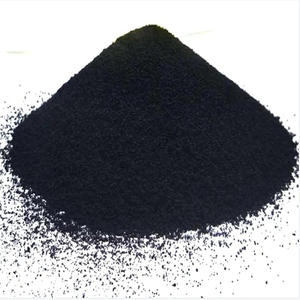
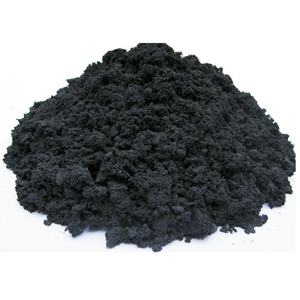
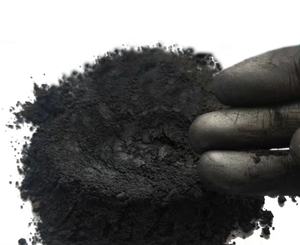
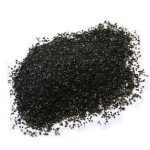
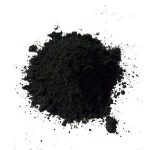
Overview of Artificial Graphite Series GS16-S
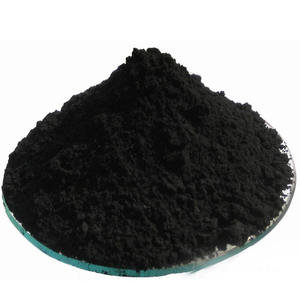
Artificial graphite is a synthetic carbon material produced through high-temperature treatment (graphitization) of carbon-rich precursors such as petroleum coke, coal tar pitch, or carbon fibers. Unlike natural graphite, which is mined, artificial graphite is engineered to achieve specific properties, making it highly valuable in industrial and technological applications.
Features of Artificial Graphite Series GS16-S
- High Purity & Consistency – Synthetic production allows for controlled purity levels, reducing impurities found in natural graphite.
- Excellent Thermal Conductivity – Efficient heat dissipation makes it ideal for high-temperature applications.
- Good Electrical Conductivity – Used in electrodes and batteries due to its conductive properties.
- High Temperature Resistance – Stable at extreme temperatures (up to 3000°C in inert atmospheres).
- Mechanical Strength – Exhibits strong structural integrity, making it suitable for high-stress environments.
- Chemical Stability – Resistant to corrosion and oxidation (when properly treated).
- Customizable Properties – Can be engineered for specific density, porosity, and grain size.


CR2025 test method (for reference only)
- Counter electrode: metal lithium sheet
- Formula: C: CMC: SP: SBR = 95.0: 1.5: 1.0: 2.5
- Electrolyte: HR303
- Charge and discharge system
a) Standby: 5min
b) Constant current discharge: 0.1C 0.005V
c) Standby: 5min
d) Constant current discharge: 0.05C 0.005V
e) Standby: 5min
f) Constant current charge: 0.1C 2.0V
g) Cycle: 5 weeks
h) Stop
Applications of Artificial Graphite Series GS16-S
- Batteries (Li-ion & Solid-State)
- Anode material due to high conductivity and cycling stability.
- Electrodes (Steel & Aluminum Production)
- Used in electric arc furnaces (EAF) and aluminum smelting.
- Semiconductor & Electronics
- Heat sinks, crucibles, and components in silicon wafer production.
- Fuel Cells & Hydrogen Energy
- Bipolar plates in PEM fuel cells due to corrosion resistance.
- Nuclear Reactors
- Moderator material due to neutron absorption properties.
- Lubricants & Coatings
- Dry lubricant in high-temperature environments.
- Additive Manufacturing (3D Printing)
- Used in conductive and high-strength composite materials.
- Aerospace & Defense
- Thermal protection systems and lightweight structural components.
Key Parameters of Artificial Graphite Series GS16-S
No. | Name | unit | Standard | Typical Value | Testing methods and instrument models | ||
| 1 | granularity | Dmin | um | ≥1.0 | 1.622 | BT-9300S laser particle size analyzer | |
| D10 | um | 6.0±2.0 | 6.12 | ||||
| D50 | um | 14.0±2.0 | 14.06 | ||||
| D90 | um | 26.0±3.0 | 25.21 | ||||
| Dmax | um | ≤55 | 46.34 | ||||
| 2 | TAP | g/cc | 1.05±0.1 | 1.03 | BT-300 fully automatic vibration tester | ||
| 3 | SSA | m2/g | 1.5±0.5 | 1.51 | Nitrogen adsorption ratio table BET test method | ||
| 4 | C | % | ≥99.95 | 99.983 | Muffle furnace calcination method | ||
| 5 | Mean compacted density | g/cc | 1.65-1.70 | 1.65-1.70 | Gram capacity/compacted density | ||
| Reversible gram capacity after deduction of electricity | mAh/g | 355-365 | 357.3 | ||||
| 6 | True density | g/cc | ≥2.22 | 2.26 | Kanta true density meter | ||
| 7 | First effect after deduction of electricity | % | ≥92% | 92.7 | CR2025(0.1C/0.1C) | ||
| 8 | Trace elements | Fe | ppm | ≤15 | 4.67 | ICP Dissolution method | |
| Co | ppm | ≤5 | 2.07 | ||||
| Cu | ppm | ≤5 | — | ||||
| Ni | ppm | ≤5 | 0.59 | ||||
| Al | ppm | ≤5 | 1.68 | ||||
Usage Recommendations of Artificial Graphite Series GS16-S
The material design capacity is recommended to be 355mAh/g, and the average compaction density is recommended to be controlled at 1.65-1.70g/cc or below. This product is suitable for water-based systems
Company Introduction
XXX is a high-tech enterprise focusing on the research, development, production and sales of high-performance artificial graphite materials. The company has advanced graphitization production lines and strict quality control systems. Its products cover anode materials, artificial graphite, hard carbon, carbon nanotubes and other products, which are widely used in new energy, metallurgy, semiconductors, photovoltaics and nuclear industries.
With independent core technology and continuous innovation, we provide customers with high-purity, high-density and high-stability graphite solutions to help the development of global green energy and high-end manufacturing. The company adheres to the concept of “quality first, customer first” and is committed to becoming an internationally leading supplier of graphite materials.
If you have any questions, please feel free to contact us: xxxx@xxxx.com
Packaging & Transportation Storage of Artificial Graphite Series GS16-S
Packaging requirements
GS16-S artificial graphite needs to be first packed into a 650mm×950mm plastic bag, sealed, and then placed in a carton, with a weight of 25 +0.02kg/box, or packed according to user requirements.
Transportation and storage
The product should be stored in a dry, ventilated place without other pollution sources (recommendation: temperature ≤45℃, humidity ≤85%);
The products should be stacked neatly and tidy, and the production batch number, production date and other signs should be clearly identifiable;
The product should be handled with care during transportation to avoid damage to the packaging; any product that leaks out of the package shall not be returned to the box.
The shelf life is 2 years at room temperature.
Precautions of Artificial Graphite Series GS16-S
a) Ensure that the negative electrode capacity per unit area is greater than or equal to the positive electrode capacity per unit area to avoid lithium precipitation during charging.
b) Ensure that there is a good interface between the separator and the electrode.
c) The surface density and compaction density of the electrode will affect the rate capacity and performance.
d) This product is a secondary particle + single particle structure. It is recommended to design and compact it to be below 1.70g/cc for best results.
FAQs of Artificial Graphite Series GS16-S
1. What is the graphitization process, and how does it affect artificial graphite properties?
Graphitization is a high-temperature treatment (typically 2,500–3,000°C) that converts amorphous carbon into crystalline graphite. This process enhances electrical conductivity, thermal stability, and mechanical strength by aligning carbon layers into a highly ordered structure. The degree of graphitization impacts key properties:
- Higher temperatures improve crystallinity, reducing resistivity.
- Longer dwell times enhance structural perfection but increase costs.
- Catalysts (e.g., boron, iron) can accelerate graphitization at lower temperatures.
Optimizing this process is crucial for applications like Li-ion anodes and high-purity electrodes, where performance depends on crystallinity and defect minimization.
2. How does artificial graphite compare to natural graphite in battery anodes?
Artificial graphite offers superior cycle life and stability due to its engineered microstructure, while natural graphite has higher capacity but poorer rate capability. Key differences:
- Particle morphology: Artificial graphite has uniform spherical particles, enabling better packing density and electrolyte penetration.
- Surface area: Synthetic grades have lower BET surface area, reducing SEI formation and improving Coulombic efficiency.
- Impurity control: Artificial graphite achieves <100 ppm metallic impurities, critical for EV batteries.
However, it requires pitch coating or silicon blending to match natural graphite’s capacity (~360 mAh/g vs. ~372 mAh/g).
3. What role does binder pitch play in artificial graphite production?
Coal tar or petroleum-based binder pitch (10–20% wt.) is essential for shaping green bodies before carbonization. Its functions include:
- Providing plasticity for extrusion/molding.
- Acting as a carbon source during pyrolysis, enhancing yield.
- Influencing porosity: Low-softening-point pitches reduce cracks but may increase shrinkage.
Advanced mesophase pitch (e.g., Mitsubishi AR) can improve graphitizability, yielding higher-density products for EDM electrodes or aerospace components.
4. Why is purification critical for nuclear-grade artificial graphite?
Nuclear reactors require graphite with ultra-low neutron absorption cross-sections, demanding:
- Halogen purification: Removes boron (<0.1 ppm) via chlorination at 2,500°C.
- Ash content <5 ppm: Minimizes neutron poisons (e.g., vanadium, cadmium).
- Isotropic structure: Ensures uniform thermal/mechanical behavior under irradiation.
Post-purification, graphite must resist radiolytic oxidation—achieved through SiC coatings or dopants like phosphorus.
5. How do pore structure modifications enhance artificial graphite for fuel cells?
For PEM fuel cell bipolar plates, graphite is engineered with:
- Controlled porosity (10–20%): Balances gas diffusion and mechanical strength.
- Hydrophobic treatments: PTFE coatings prevent water flooding.
- Conductive fillers: Carbon nanotubes reduce interfacial contact resistance (<10 mΩ·cm²).
Such modifications optimize corrosion resistance (<1 μA/cm²) and power density (>1 W/cm²) in acidic environments.