Profesjonell leverandør av grafittmateriale, grafitt for EV, fett, ovn og annen industri.


PRODUKTPARAMETRE
Beskrivelse
The percentage of high-purity carbon nanotube fibers used in aerospace materials depends on several factors, including the specific requirements of the application and the desired properties of the final product. Generally speaking, the higher the percentage of carbon nanotube fibers used, the more high-quality the final product will be.
(98.5% High purity Carbon nanotube fibers for aerospace materials)
Overview of 98.5% High purity Carbon nanotube fibers for aerospace materials
Carbon nanotubes (CNTs) are cylindrical nanostructures consisting of a single sheet of rolled-up graphene, a two-dimensional lattice of carbon atoms. Oppdaget i 1991, CNTs exhibit extraordinary properties due to their unique molecular structure, making them one of the most promising materials in nanotechnology. They can be single-walled (SWCNTs) or multi-walled (MWCNTs), differing in the number of concentric carbon layers.
Features of 98.5% High purity Carbon nanotube fibers for aerospace materials
Exceptional Strength and Stiffness: CNTs are among the strongest and stiffest materials known, with tensile strengths up to 60 times greater than steel.
Lightweight: Despite their strength, CNTs are extremely lightweight, with a density close to that of graphite.
High Thermal and Electrical Conductivity: They can conduct heat and electricity far better than copper, silver, or gold, with electrons flowing freely along the tube’s length.
Kjemisk inert: CNTs are highly resistant to chemical reactions and corrosion, maintaining their properties in harsh environments.
Flexibility: They can be bent or twisted without breaking, displaying excellent flexibility alongside their strength.
Large Surface Area: CNTs have an incredibly high surface area to volume ratio, enhancing their effectiveness in adsorption and catalytic applications.
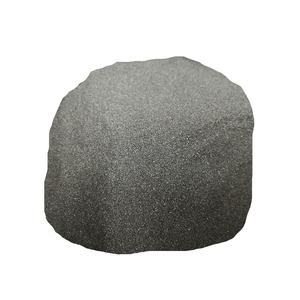
(98.5% High purity Carbon nanotube fibers for aerospace materials)
Parameter of 98.5% High purity Carbon nanotube fibers for aerospace materials
The percentage of high-purity carbon nanotube fibers used in aerospace materials depends on several factors, including the specific requirements of the application and the desired properties of the final product. Generally speaking, the higher the percentage of carbon nanotube fibers used, the more high-quality the final product will be.
There are several types of carbon nanotube fibers available, each with its own advantages and disadvantages. Some common types includenita (C), polycarbonate (PP), and carbon fiber reinforced polymers (CFRP).
In terms of applications, some popular choices include composites made from carbon nanotubes, which can improve performance in areas such as propulsion, structural integrity, and cost-effectiveness. These composites are often formulated using specific blendings of carbon fibers and reinforcing polymers, to provide excellent strength and durability.
It’s worth noting that the use of carbon nanotube fibers in is not a straightforward process, and it requires careful planning and experimentation to achieve optimal results. Imidlertid, with proper techniques and materials selection, this technology has the potential to revolutionize the industry.

(98.5% High purity Carbon nanotube fibers for aerospace materials)
Applications of 98.5% High purity Carbon nanotube fibers for aerospace materials
Elektronikk: Used in transistors, sensors, and displays due to their high conductivity and small size, potentially revolutionizing electronics miniaturization.
Composite Materials: Mixed with polymers to create lightweight, strong composites for aerospace, bilindustrien, og sportsutstyr.
Energilagring: In batteries and supercapacitors, CNTs improve energy storage capacity and charge/discharge rates.
Biomedical: As drug delivery vehicles, tissue engineering scaffolds, and in biomedical sensors due to their biocompatibility and unique transport properties.
Catalysts: Their large surface area makes CNTs efficient catalyst supports and catalysts themselves in various chemical reactions.
Environmental Remediation: Utilized for water purification and air filtration due to their adsorptive properties for contaminants.
Bedriftsprofil
Graphite-Corp er en pålitelig global leverandør av kjemiske materialer & produsent med over 12 års erfaring med å levere grafittpulver og grafenprodukter av super høy kvalitet.
Selskapet har en profesjonell teknisk avdeling og kvalitetstilsynsavdeling, et velutstyrt laboratorium, og utstyrt med avansert testutstyr og kundeservicesenter etter salg.
Hvis du er ute etter grafittpulver av høy kvalitet og relative produkter, Ta gjerne kontakt med oss eller klikk på de nødvendige produktene for å sende en forespørsel.
Betalingsmetoder
L/C, T/T, Western Union, Paypal, Kredittkort etc.
Forsendelse
Den kan sendes sjøveien, med fly, eller ved å avsløre ASAP så snart tilbakebetaling kvittering.
FAQs of 98.5% High purity Carbon nanotube fibers for aerospace materials
Q: Is 98.5% High purity Carbon nanotube fibers for aerospace materials safe for human health and the environment?
EN: Concerns have been raised about the potential toxicity of CNTs, particularly their respirable forms, which may resemble asbestos fibers. Research is ongoing to establish safe handling practices and assess long-term environmental impacts.
Q: How is 98.5% High purity Carbon nanotube fibers for aerospace materials produced?
EN: There are several methods to produce CNTs, including arc discharge, laser ablation, and chemical vapor deposition (CVD), with CVD being the most common for industrial-scale production.
Q: Can 98.5% High purity Carbon nanotube fibers for aerospace materials be seen with the naked eye?
EN: No, due to their nanoscale dimensions (typically 1-100 nanometers in diameter), CNTs are invisible to the naked eye and require electron microscopy for visualization.
Q: Is 98.5% High purity Carbon nanotube fibers for aerospace materials expensive?
EN: Historically, CNTs were very expensive due to complex synthesis processes. Imidlertid, advances in production methods have lowered costs, though they remain more expensive than many conventional materials.
Q: How does 98.5% High purity Carbon nanotube fibers for aerospace materials compare to graphene?
EN: Both are forms of carbon with exceptional properties, but graphene is a flat sheet while CNTs are tubes. Graphene offers superior in-plane conductivity, while CNTs excel in out-of-plane conductivity and have additional mechanical advantages due to their tubular structure.
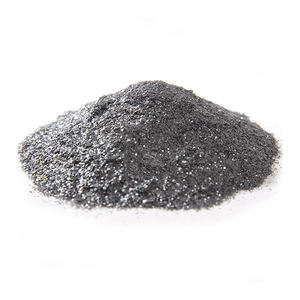
(98.5% High purity Carbon nanotube fibers for aerospace materials)
(98.5% High purity Carbon nanotube fibers for aerospace materials)
BE ET TILBUD
RELATERTE PRODUKTER
2023 New Design Carbon Racket Badminton Rackets For Factory s Racquet Custom
High aspect ratio carbon nanotubes for heat dissipation of lithium battery electrode conductive agent for electric heating film
Professional Custom Thickness Filament Winding Carbon Fibre Pole Carbon Fiber Tube
polyimide film heater 5v carbon nanotube film infrared heating panel pi film for auto parts
Masterbatch Factory Whole POM/PS/PA/PC/HIPS/ABS/PET 45% Carbon Black Masterbatch-Thermoplastic Polymer POM Black Masterbatch