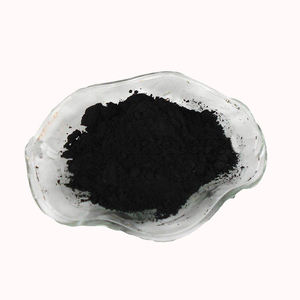
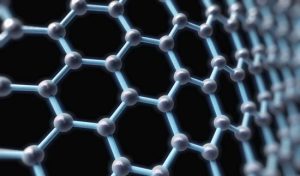
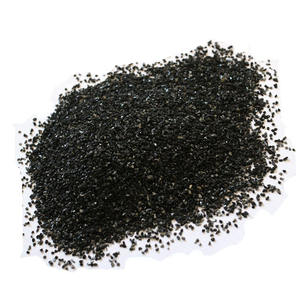
Fornitur professjonali ta 'materjal tal-grafita, grafita għal EV, grass, forn u kwalunkwe industrija oħra.

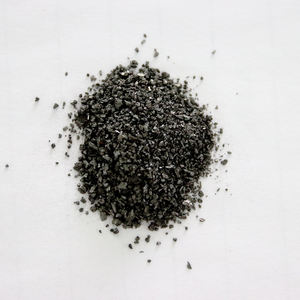
(Advantages and Disadvantages of Graphite As an EDM Graphite Electrode)
Graphite is the most commonly used electrode material for EDM applications. It has some great advantages, including low cost, good electrical conductivity, and fast machinability. Madankollu, graphite also has disadvantages. Per eżempju, it has a high melting point. This means that it has a limited ability to be reused. Barra minn hekk, it is susceptible to mechanical shock.
Copper, min-naħa l-oħra, has a melting point of 1,100degC. That makes it less expensive to produce. Barra minn hekk, copper is a recyclable material.
The physical properties of graphite and copper affect the performance of EDM operations. While the former has a higher melting point, it has a lower coefficient of linear expansion. These characteristics make it less likely to deform under heat. They also make it less prone to thermal shock.
Another advantage of graphite is its low density. Bħala riżultat, it can be milled into small pieces that are easier to process. Using these small pieces can reduce the wear rate of the EDM process.
Graphite also has excellent dimensional accuracy. Compared with copper, it is able to achieve a near mirror finish without using powder additives.
A high melting point is one of the major reasons why graphite is a common EDM electrode. Madankollu, this also means that the material is vulnerable to abnormal discharge. To avoid this, quality flushing and negative polarity machining can help to reduce the risk of such incidents.
Unlike copper, graphite is resistant to thermal shock. Barra minn hekk, the electrode can retain its shape at high temperatures.
(Advantages and Disadvantages of Graphite As an EDM Graphite Electrode)