Profesia provizanto de grafita materialo, grafito por EV, graso, forno kaj iuj aliaj industrioj.

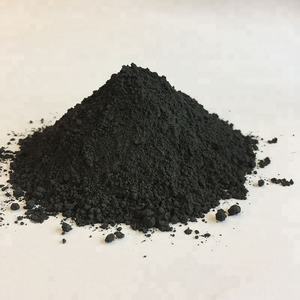
PRODUCT PARAMETROJ
Priskribo
The parameter of graphene car body nano ceramic coating liquidnano-coating carbon nanotube heating and cooling coating refers to the properties of the coating that affect its performance, such as the particle size, coverage percentage, adhesion strength, chemical stability, and thermal conductivity.
(Graphene car body nano ceramic coating liquid nano-coating carbon nanotube heating and cooling coating)
Overview of Graphene car body nano ceramic coating liquid nano-coating carbon nanotube heating and cooling coating
Carbon nanotubes (CNTs) are cylindrical nanostructures consisting of a single sheet of rolled-up graphene, a two-dimensional lattice of carbon atoms. Malkovrita en 1991, CNTs exhibit extraordinary properties due to their unique molecular structure, making them one of the most promising materials in nanotechnology. They can be single-walled (SWCNTs) or multi-walled (MWCNTs), differing in the number of concentric carbon layers.
Features of Graphene car body nano ceramic coating liquid nano-coating carbon nanotube heating and cooling coating
Exceptional Strength and Stiffness: CNTs are among the strongest and stiffest materials known, with tensile strengths up to 60 times greater than steel.
Lightweight: Despite their strength, CNTs are extremely lightweight, with a density close to that of graphite.
High Thermal and Electrical Conductivity: They can conduct heat and electricity far better than copper, silver, or gold, with electrons flowing freely along the tube’s length.
Kemie Inerta: CNTs are highly resistant to chemical reactions and corrosion, maintaining their properties in harsh environments.
Flexibility: They can be bent or twisted without breaking, displaying excellent flexibility alongside their strength.
Large Surface Area: CNTs have an incredibly high surface area to volume ratio, enhancing their effectiveness in adsorption and catalytic applications.
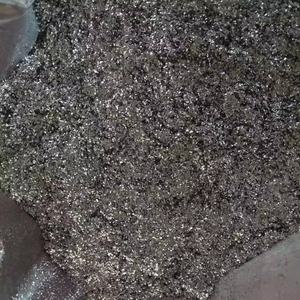
(Graphene car body nano ceramic coating liquid nano-coating carbon nanotube heating and cooling coating)
Parameter of Graphene car body nano ceramic coating liquid nano-coating carbon nanotube heating and cooling coating
The parameter of graphene car body nano ceramic coating liquidnano-coating carbon nanotube heating and cooling coating refers to the properties of the coating that affect its performance, such as the particle size, coverage percentage, adhesion strength, chemical stability, and thermal conductivity.
1. Particle size: The smaller the particles of the coating, the better the coverage percentage and the higher the adhesion strength. Tamen, too small particles can lead to reduced mechanical strength and increased wear resistance.
2. Coverage percentage: The greater the coverage percentage of the coating, the higher the performance of the coating. Tamen, it is important to achieve a balance between coverage and other factors such as cost and environmental impact.
3. Adhesion strength: The adhesion strength of the coating depends on the type of chemistry used and the surface property of the substrate. Stronger adhesion can result in improved durability and long-term performance.
4. Chemical stability: The chemical stability of the coating can be affected by various factors, including temperature, humidity, and exposure to chemicals. A stable coating can improve the safety and reliability of the device.
5. Thermal conductivity: The thermal conductivity of the coating can be influenced by its material composition, thickness, and structure. A high thermal conductivity can reduce heat dissipation and improve energy efficiency of the device.
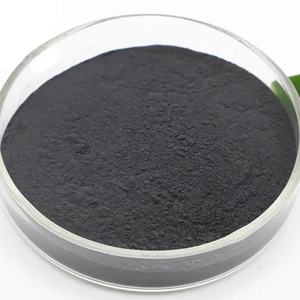
(Graphene car body nano ceramic coating liquid nano-coating carbon nanotube heating and cooling coating)
Applications of Graphene car body nano ceramic coating liquid nano-coating carbon nanotube heating and cooling coating
Elektroniko: Used in transistors, sensors, and displays due to their high conductivity and small size, potentially revolutionizing electronics miniaturization.
Composite Materials: Mixed with polymers to create lightweight, strong composites for aerospace, aŭtomobila, kaj sporta ekipaĵo.
Stokado de Energio: In batteries and supercapacitors, CNTs improve energy storage capacity and charge/discharge rates.
Biomedical: As drug delivery vehicles, tissue engineering scaffolds, and in biomedical sensors due to their biocompatibility and unique transport properties.
Catalysts: Their large surface area makes CNTs efficient catalyst supports and catalysts themselves in various chemical reactions.
Environmental Remediation: Utilized for water purification and air filtration due to their adsorptive properties for contaminants.
Kompanio Profilo
Graphite-Corp estas fidinda tutmonda kemia materiala provizanto & fabrikisto kun pli ol 12-jara sperto provizi super altkvalitan grafitan pulvoron kaj grafenajn produktojn.
La firmao havas profesian teknikan fakon kaj Kvalitan Superrigardan Fakon, bone ekipita laboratorio, kaj ekipita per altnivela testa ekipaĵo kaj post-venda klientserva centro.
Se vi serĉas altkvalitan grafitan pulvoron kaj relativajn produktojn, bonvolu kontakti nin aŭ alklaki la bezonatajn produktojn por sendi enketon.
Pag-Metodoj
L/C, T/T, Okcidenta Unio, Paypal, Kreditkarto ktp.
Sendo
Ĝi povus esti sendita per maro, per aero, aŭ malkaŝante tuj kiam repago kvitanco.
FAQs of Graphene car body nano ceramic coating liquid nano-coating carbon nanotube heating and cooling coating
Q: Is Graphene car body nano ceramic coating liquid nano-coating carbon nanotube heating and cooling coating safe for human health and the environment?
A: Concerns have been raised about the potential toxicity of CNTs, particularly their respirable forms, which may resemble asbestos fibers. Research is ongoing to establish safe handling practices and assess long-term environmental impacts.
Q: How is Graphene car body nano ceramic coating liquid nano-coating carbon nanotube heating and cooling coating produced?
A: There are several methods to produce CNTs, including arc discharge, laser ablation, and chemical vapor deposition (CVD), with CVD being the most common for industrial-scale production.
Q: Can Graphene car body nano ceramic coating liquid nano-coating carbon nanotube heating and cooling coating be seen with the naked eye?
A: No, due to their nanoscale dimensions (typically 1-100 nanometers in diameter), CNTs are invisible to the naked eye and require electron microscopy for visualization.
Q: Is Graphene car body nano ceramic coating liquid nano-coating carbon nanotube heating and cooling coating expensive?
A: Historically, CNTs were very expensive due to complex synthesis processes. Tamen, advances in production methods have lowered costs, though they remain more expensive than many conventional materials.
Q: How does Graphene car body nano ceramic coating liquid nano-coating carbon nanotube heating and cooling coating compare to graphene?
A: Both are forms of carbon with exceptional properties, but graphene is a flat sheet while CNTs are tubes. Graphene offers superior in-plane conductivity, while CNTs excel in out-of-plane conductivity and have additional mechanical advantages due to their tubular structure.
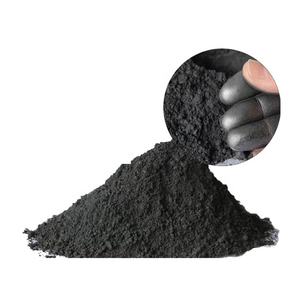
(Graphene car body nano ceramic coating liquid nano-coating carbon nanotube heating and cooling coating)
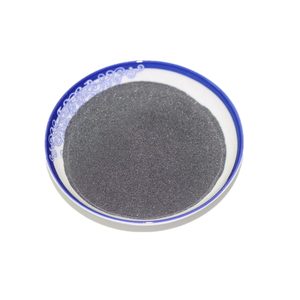
(Graphene car body nano ceramic coating liquid nano-coating carbon nanotube heating and cooling coating)
PETU KITTON
RELATAJ PRODUTOJ
Custom 400mm 800mm 1000mm length 3K Twill Matte Carbon Fiber Tube OEM dimensions Carbon Fiber Pipe Tubing for Outdoor sports

High strength stable acid and corrosion resistant carbon nanotubes are used for ABS Acrylonitrile Butadiene Styrene
Multi Walled Carbon Nanotubes 99% for conductive Powder

Carbon Nanotubes Excellent electrical conductivity

High strength carbon fiber airfoil square tube carbon fiber tubing for