


Cyflenwr deunydd graffit proffesiynol, graffit ar gyfer EV, saim, ffwrnais ac unrhyw ddiwydiannau eraill.

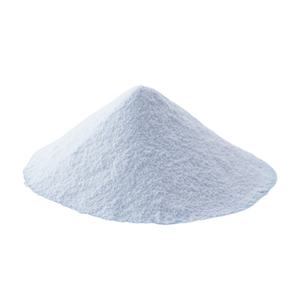
PARAMEDRAU CYNNYRCH
Disgrifiad
MWCNTs powder carbon nanotubes (NCTs) are often used as raw materials in lithium-ion batteries due to their unique properties, such as high surface area and excellent electrical conductivity. The parameter of MWCNTs powders can be influenced by several factors, including:
(MWCNTs Powder Carbon Nanotubes for Lithium ion battery anode raw materials)
Overview of MWCNTs Powder Carbon Nanotubes for Lithium ion battery anode raw materials
Carbon nanotubes (CNTs) are cylindrical nanostructures consisting of a single sheet of rolled-up graphene, a two-dimensional lattice of carbon atoms. Wedi'i ddarganfod yn 1991, CNTs exhibit extraordinary properties due to their unique molecular structure, making them one of the most promising materials in nanotechnology. They can be single-walled (SWCNTs) or multi-walled (MWCNTs), differing in the number of concentric carbon layers.
Features of MWCNTs Powder Carbon Nanotubes for Lithium ion battery anode raw materials
Exceptional Strength and Stiffness: CNTs are among the strongest and stiffest materials known, with tensile strengths up to 60 times greater than steel.
Lightweight: Despite their strength, CNTs are extremely lightweight, with a density close to that of graphite.
High Thermal and Electrical Conductivity: They can conduct heat and electricity far better than copper, silver, or gold, with electrons flowing freely along the tube’s length.
Anadweithiol yn gemegol: CNTs are highly resistant to chemical reactions and corrosion, maintaining their properties in harsh environments.
Flexibility: They can be bent or twisted without breaking, displaying excellent flexibility alongside their strength.
Large Surface Area: CNTs have an incredibly high surface area to volume ratio, enhancing their effectiveness in adsorption and catalytic applications.
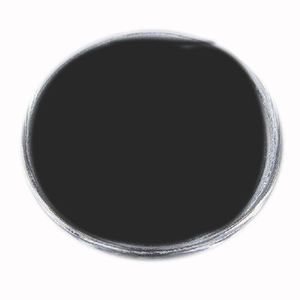
(MWCNTs Powder Carbon Nanotubes for Lithium ion battery anode raw materials)
Parameter of MWCNTs Powder Carbon Nanotubes for Lithium ion battery anode raw materials
MWCNTs powder carbon nanotubes (NCTs) are often used as raw materials in lithium-ion batteries due to their unique properties, such as high surface area and excellent electrical conductivity. The parameter of MWCNTs powders can be influenced by several factors, including:
1. Composition: The composition of MWCNTs powder affects its properties, such as its size, shape, and number of NCTs per unit volume. Different compositions may result in different crystal structures and surface areas.
2. Forming method: The formation method used to produce MWCNTs powder also influences its properties. Common methods include mechanical exfoliation, dyddodiad anwedd cemegol (CVD), or sonochemical etching.
3. Temperature: The temperature at which MWCNTs powder is prepared can affect its physical properties, such as its mechanical strength and thermal stability.
4. Water content: The water content of MWCNTs powder can affect its structure and properties, such as its swelling behavior and swelling ratio.
5. Processing conditions: The processing conditions used to fabricate MWCNTs powder, such as temperature, pressure, and humidity, can affect its purity and quality.
In general, the optimal parameters for MWCNTs powder carbon nanotubes for use in lithium-ion batteries will depend on the specific requirements of the application, such as the desired aspect ratio, charge carrier density, and energy density. Further research is needed to optimize these parameters for various applications.

(MWCNTs Powder Carbon Nanotubes for Lithium ion battery anode raw materials)
Applications of MWCNTs Powder Carbon Nanotubes for Lithium ion battery anode raw materials
Electroneg: Used in transistors, sensors, and displays due to their high conductivity and small size, potentially revolutionizing electronics miniaturization.
Composite Materials: Mixed with polymers to create lightweight, strong composites for aerospace, modurol, ac offer chwaraeon.
Storio Ynni: In batteries and supercapacitors, CNTs improve energy storage capacity and charge/discharge rates.
Biomedical: As drug delivery vehicles, tissue engineering scaffolds, and in biomedical sensors due to their biocompatibility and unique transport properties.
Catalysts: Their large surface area makes CNTs efficient catalyst supports and catalysts themselves in various chemical reactions.
Environmental Remediation: Utilized for water purification and air filtration due to their adsorptive properties for contaminants.
Proffil Cwmni
Mae Graphite-Corp yn gyflenwr deunydd cemegol byd-eang dibynadwy & gwneuthurwr gyda dros 12 mlynedd o brofiad o ddarparu powdr graffit a chynhyrchion graphene o ansawdd uchel iawn.
Mae gan y cwmni adran dechnegol broffesiynol ac Adran Goruchwylio Ansawdd, labordy â chyfarpar da, ac yn meddu ar offer profi uwch a chanolfan gwasanaeth cwsmeriaid ôl-werthu.
Os ydych chi'n chwilio am bowdr graffit o ansawdd uchel a chynhyrchion cymharol, mae croeso i chi gysylltu â ni neu glicio ar y cynhyrchion sydd eu hangen i anfon ymholiad.
Dulliau Talu
L/C, T/T, Undeb gorllewinol, Paypal, Cerdyn Credyd ac ati.
Cludo
Gellid ei gludo ar y môr, mewn awyren, neu drwy ddatgelu cyn gynted ag y derbynnir ad-daliad.
FAQs of MWCNTs Powder Carbon Nanotubes for Lithium ion battery anode raw materials
C: Is MWCNTs Powder Carbon Nanotubes for Lithium ion battery anode raw materials safe for human health and the environment?
A: Concerns have been raised about the potential toxicity of CNTs, particularly their respirable forms, which may resemble asbestos fibers. Research is ongoing to establish safe handling practices and assess long-term environmental impacts.
C: How is MWCNTs Powder Carbon Nanotubes for Lithium ion battery anode raw materials produced?
A: There are several methods to produce CNTs, including arc discharge, laser ablation, and chemical vapor deposition (CVD), with CVD being the most common for industrial-scale production.
C: Can MWCNTs Powder Carbon Nanotubes for Lithium ion battery anode raw materials be seen with the naked eye?
A: No, due to their nanoscale dimensions (typically 1-100 nanometers in diameter), CNTs are invisible to the naked eye and require electron microscopy for visualization.
C: Is MWCNTs Powder Carbon Nanotubes for Lithium ion battery anode raw materials expensive?
A: Historically, CNTs were very expensive due to complex synthesis processes. Fodd bynnag, advances in production methods have lowered costs, though they remain more expensive than many conventional materials.
C: How does MWCNTs Powder Carbon Nanotubes for Lithium ion battery anode raw materials compare to graphene?
A: Both are forms of carbon with exceptional properties, but graphene is a flat sheet while CNTs are tubes. Graphene offers superior in-plane conductivity, while CNTs excel in out-of-plane conductivity and have additional mechanical advantages due to their tubular structure.
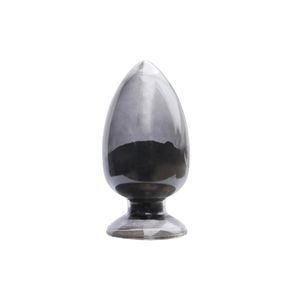
(MWCNTs Powder Carbon Nanotubes for Lithium ion battery anode raw materials)
(MWCNTs Powder Carbon Nanotubes for Lithium ion battery anode raw materials)
GOFYNNWCH DYFYNBRIS
CYNHYRCHION CYSYLLTIEDIG
High thermal conductivity enhanced antistatic energy storage battery energy material modified carbon nanotubes

MWCNTs multi walled carbon nanotubes for polymer

Carbon Nanotubes High-performing Conductive Additive for Batteries
Twill matte carbon fiber round tube 3k carbon fiber tubing 20mm 30mm 40mm 50mm
Factory high quality Carbon nanotubes DWCNT powder conductive material for battery
