Fornitore prufessiunale di materiale di grafite, grafite per EV, grassu, furnace è qualsiasi altre industrie.


PARAMETRI DI PRODUTTIU
Descrizzione
A single layer carbon nanotube (SCLNT) is a type of carbon nanotube that has only one layer of carbon atoms packed tightly together, creating a highly interconnected network structure. SCLNTs have many potential applications in areas such as electronics, medicine, and energy storage.
(Single Layer Carbon Nanotube s For R&D)
Overview of Single Layer Carbon Nanotube s For R&D
Carbon nanotubes (CNTs) are cylindrical nanostructures consisting of a single sheet of rolled-up graphene, a two-dimensional lattice of carbon atoms. Scopre in 1991, CNTs exhibit extraordinary properties due to their unique molecular structure, making them one of the most promising materials in nanotechnology. They can be single-walled (SWCNTs) or multi-walled (MWCNTs), differing in the number of concentric carbon layers.
Features of Single Layer Carbon Nanotube s For R&D
Exceptional Strength and Stiffness: CNTs are among the strongest and stiffest materials known, with tensile strengths up to 60 times greater than steel.
Lightweight: Despite their strength, CNTs are extremely lightweight, with a density close to that of graphite.
High Thermal and Electrical Conductivity: They can conduct heat and electricity far better than copper, silver, or gold, with electrons flowing freely along the tube’s length.
Chimicamente inerte: CNTs are highly resistant to chemical reactions and corrosion, maintaining their properties in harsh environments.
Flexibility: They can be bent or twisted without breaking, displaying excellent flexibility alongside their strength.
Large Surface Area: CNTs have an incredibly high surface area to volume ratio, enhancing their effectiveness in adsorption and catalytic applications.
(Single Layer Carbon Nanotube s For R&D)
Parameter of Single Layer Carbon Nanotube s For R&D
A single layer carbon nanotube (SCLNT) is a type of carbon nanotube that has only one layer of carbon atoms packed tightly together, creating a highly interconnected network structure. SCLNTs have many potential applications in areas such as electronics, medicine, and energy storage.
For R&D parameter control in SCLNTs, there are several factors to consider, including:
1. Material properties: The diameter, chirality, and quality of the SCLNTs can affect their electrical and mechanical properties. These properties can be influenced by factors such as temperature, pressure, and composition.
2. Temperature stability: SCLNTs can form structural defects at high temperatures, which can affect their functionality and performance. Temperature stability is an important consideration for determining the range of temperatures over which SCLNTs can be used.
3. Optical properties: SCLNTs have unique optical properties, such as low light scattering and strong absorption. These properties can be useful for developing new devices or materials with specific optical properties.
4. Mechanical properties: SCLNTs can have high strength-to-weight ratios, which make them well-suited for use in aerospace and biomedical applications. Tuttavia, they can also be heavy and difficult to work with, which can limit their use.
Overall, controlling these parameters for SCLNTs requires careful consideration of material properties, temperature stability, optical properties, and mechanical properties, and may require advanced analytical techniques and modeling software.
(Single Layer Carbon Nanotube s For R&D)
Applications of Single Layer Carbon Nanotube s For R&D
Elettronica: Used in transistors, sensors, and displays due to their high conductivity and small size, potentially revolutionizing electronics miniaturization.
Composite Materials: Mixed with polymers to create lightweight, strong composites for aerospace, automobile, è equipamentu sportiu.
Storage d'energia: In batteries and supercapacitors, CNTs improve energy storage capacity and charge/discharge rates.
Biomedical: As drug delivery vehicles, tissue engineering scaffolds, and in biomedical sensors due to their biocompatibility and unique transport properties.
Catalysts: Their large surface area makes CNTs efficient catalyst supports and catalysts themselves in various chemical reactions.
Environmental Remediation: Utilized for water purification and air filtration due to their adsorptive properties for contaminants.
Profilu di a cumpagnia
Graphite-Corp hè un fornitore di materiale chimicu globale di fiducia & fabricatore cù più di 12 anni di sperienza in furnisce grafite in polvere di grafite di alta qualità è prudutti di grafene.
A cumpagnia hà un dipartimentu tecnicu prufessiunale è un dipartimentu di supervisione di qualità, un laboratoriu ben equipatu, è dotatu di equipaggiu di prova avanzatu è centru di serviziu di serviziu di u cliente post-vendita.
Sè vo circate di grafite di alta qualità è prudutti relative, per piacè cuntattateci o cliccate nantu à i prudutti necessarii per mandà una dumanda.
I metudi di pagamentu
L/C, T/T, Western Union, Paypal, Carta di creditu ecc.
Spedizioni
Puderia esse speditu per mare, per l'aria, o da revelà ASAP appena riceve u rimborsu.
FAQs of Single Layer Carbon Nanotube s For R&D
Q: Is Single Layer Carbon Nanotube s For R&D safe for human health and the environment?
A: Concerns have been raised about the potential toxicity of CNTs, particularly their respirable forms, which may resemble asbestos fibers. Research is ongoing to establish safe handling practices and assess long-term environmental impacts.
Q: How is Single Layer Carbon Nanotube s For R&D produced?
A: There are several methods to produce CNTs, including arc discharge, laser ablation, and chemical vapor deposition (CVD), with CVD being the most common for industrial-scale production.
Q: Can Single Layer Carbon Nanotube s For R&D be seen with the naked eye?
A: Innò, due to their nanoscale dimensions (typically 1-100 nanometers in diameter), CNTs are invisible to the naked eye and require electron microscopy for visualization.
Q: Is Single Layer Carbon Nanotube s For R&D expensive?
A: Historically, CNTs were very expensive due to complex synthesis processes. Tuttavia, advances in production methods have lowered costs, though they remain more expensive than many conventional materials.
Q: How does Single Layer Carbon Nanotube s For R&D compare to graphene?
A: Both are forms of carbon with exceptional properties, but graphene is a flat sheet while CNTs are tubes. Graphene offers superior in-plane conductivity, while CNTs excel in out-of-plane conductivity and have additional mechanical advantages due to their tubular structure.
(Single Layer Carbon Nanotube s For R&D)
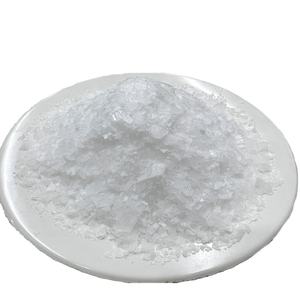
(Single Layer Carbon Nanotube s For R&D)
RICHIEDE UN QUOTE
PRODOTTI RELATI
Large Surface Area Single-walled Carbon Nanotubes

Factory direct 26*24*1000mm spread tow carbon fibre pipe tubing

Top Quality Badminton Racket Whole Carbon Fiber Flam Fabric for Professional Training or Match
Battery Grade Industry N660 Cosmetic Pigments Carbon Black

16mm Carbon Nanotubes Micropore Nano Rubber Oxygen Air Diffuser Tube Aeration Hose Use With Ring Blower