Professional graphite material supplier, graphite for EV, grease, furnace and any other industries.

Catchy Title: Hard Carbon Secrets: How Tweaking Its Bones Supercharges Performance

(Relationship Between Structural Regulation And Performance Of Hard Carbon Materials)
Main Product Keywords: Hard Carbon, Performance
Blog Post:
Imagine a material looking like messy charcoal under a microscope. This is hard carbon. Don’t let the name fool you. This stuff is a superstar in high-tech gadgets and clean energy. Think super-fast charging batteries for your phone or electric car. Its secret power lies entirely in its inner structure. Change that structure just right, and you unlock amazing performance boosts. Let’s dig into how scientists play architect with hard carbon’s tiny building blocks to make it work better for us.
1. What Exactly is Hard Carbon?
Hard carbon is a special kind of carbon material. It’s not like the graphite in your pencil. Graphite has neat, stacked layers like a deck of cards. Hard carbon is different. Its structure is messy. Imagine a pile of crumpled paper sheets, bent graphene layers, and tiny holes all jumbled together. Scientists call this a “turbostratic” structure. It’s disordered, but that disorder is key. This messy arrangement creates lots of little nooks and crannies, called nanopores. It also leaves many “dangling bonds,” places where carbon atoms are eager to connect with other things. This unique, non-graphitic structure is what makes hard carbon special. It gives it properties graphite can’t match, especially for storing energy.
2. Why Does Structure Dictate Hard Carbon Performance?
Structure is everything for hard carbon. Think of it like the bones inside your body. Strong, well-arranged bones let you run fast and jump high. Weak or poorly arranged bones cause problems. It’s the same for hard carbon. Every important thing it does depends on its inner architecture. Need it to store lots of lithium or sodium ions for batteries? The number and size of those tiny pores matter. Want electrons to zip through it quickly for fast charging? How well the graphene fragments connect determines that. Need it to be stable and last for thousands of charging cycles? The strength of the bonds holding the whole messy structure together is crucial. Even how easily chemicals can get in and out depends on the pore openings. So, controlling the structure isn’t optional. It’s the only way to get the performance we need.
3. How Do Scientists Tweak Hard Carbon’s Structure?
Scientists have several clever ways to play with hard carbon’s bones. Think of them as tuning knobs. The first knob is the starting material, the “precursor.” Different things like sugar, wood, or special plastics burn down to make carbon. Each one leaves a different structural fingerprint. Sugar might give lots of small pores. Wood might create a more fibrous structure. The second big knob is the heating process, called pyrolysis. How hot you cook it and how long you cook it drastically changes the structure. Higher temperatures often make things more orderly, like graphite. But you need that sweet spot of disorder. Too hot, and you lose the useful pores. Too cool, and the material might be weak. The third knob is adding other elements, “doping.” Sprinkling in atoms like nitrogen, phosphorus, or sulfur can change the carbon bonds. It creates more active spots or changes how ions interact with the surface. Scientists carefully adjust these knobs – precursor, temperature, time, doping – to build the perfect hard carbon structure for the job.
4. Where Do We See High-Performance Hard Carbon in Action?
The biggest star application right now is batteries. Specifically, the negative electrode (anode) in sodium-ion batteries and next-generation lithium-ion batteries. Graphite, the usual anode material, struggles with sodium. Hard carbon, with its spacious pores, welcomes sodium ions easily. This makes sodium-ion batteries a cheaper alternative to lithium-ion for big storage needs. For lithium batteries, hard carbon anodes can charge incredibly fast. Imagine charging your electric car in minutes. Hard carbon’s structure allows lithium ions to rush in and out much quicker than graphite can handle. It’s also super stable over many cycles. Beyond batteries, its unique structure is useful elsewhere. You find it in supercapacitors needing fast energy bursts. It works in water purification systems, acting like a super-absorbent sponge for pollutants. Special sensors use it because its surface chemistry can detect specific molecules. Wherever you need strong, porous, electrically conductive carbon, tailored hard carbon is a top contender.
5. Hard Carbon FAQs: Your Burning Questions Answered
Q: Is hard carbon just fancy charcoal?
A: Sort of, but not really. Charcoal is a simple, natural hard carbon. Modern engineered hard carbon is made precisely from specific materials under controlled conditions. Scientists design its structure for exact performance, making it far more advanced than charcoal.
Q: Why not just use graphite everywhere?
A: Graphite is great, but it has limits. It can’t store sodium ions well, limiting battery types. Charging graphite too fast risks damage or fire. Hard carbon’s disordered structure solves these problems for sodium batteries and enables ultra-fast charging in lithium batteries.
Q: Is hard carbon expensive?
A: It can be, especially very high-performance types. But a big advantage is its potential to use cheap, renewable precursors like biomass (sawdust, coconut shells). Research focuses on making high-performance hard carbon from low-cost sources to drive prices down.
Q: How long do hard carbon batteries last?
A: This depends heavily on the structure! Well-designed hard carbon anodes are incredibly durable. They can handle thousands of charge-discharge cycles (often 1000s to 10,000s) with minimal performance loss, especially when paired with the right battery chemistry. Its structural stability is a major plus.
Q: What’s the biggest challenge with hard carbon right now?
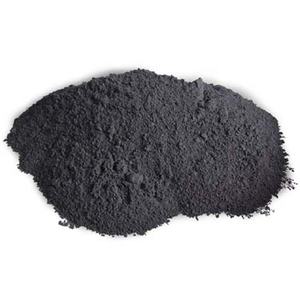
(Relationship Between Structural Regulation And Performance Of Hard Carbon Materials)
A: Control and consistency. Getting exactly the right structure every single time during large-scale production is tough. Also, understanding precisely how ions move and store within its complex pores is an active research area. Making it consistently perfect is key for mass adoption.